
Reviewed · WILDLIFE AND NATURE
Safari – Finding the most endangered monkey in the World
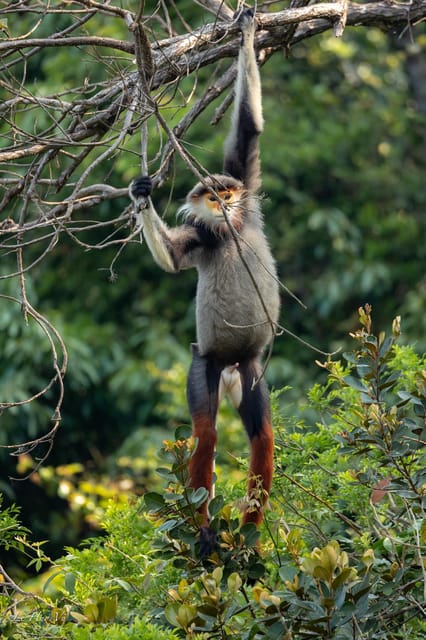
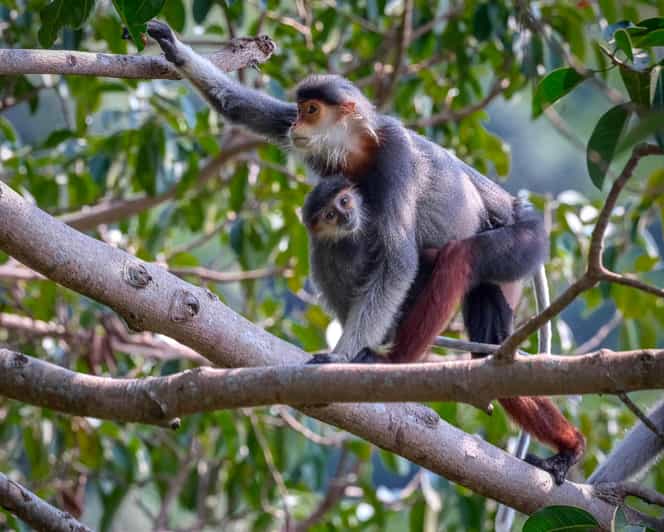
The star here is the red-shanked douc langur, a critically endangered monkey with a striking face, pale body, and rust-colored legs. You ride into Son Tra Nature Reserve near Da Nang, then leave the main road on foot to look for animals that most people miss.
I like the small groups, limited to five, and the way the guides use motorbikes to reach quiet slopes instead of keeping you on one short walking path. I also like the conservation-minded approach: you keep your distance, help record sightings, and learn how to identify a male, female, adult, or youngster. The main caution is simple: monkey sightings are never guaranteed, and the ride and trail work best for light travelers who are comfortable on a motorbike and uneven mountain routes.
In This Review
- Key points about this Son Tra monkey safari
- Why the red-shanked douc langur is worth seeking
- From Esco Beach Bar to Monkey Mountain
- Searching the forest slopes on foot
- Meeting the forest photographers
- Views, slopes, and the secret beach
- What the guides add to the experience
- Sunset timing and what to bring
- Is $48 good value?
- Who should book this safari?
- Practical details before you reserve
- Should you book the Son Tra monkey safari?
- FAQ
- Where does the safari start and finish?
- How long does the activity last?
- Are monkey sightings guaranteed?
- What is included?
- Can I bring luggage or a large backpack?
- Is the safari suitable for children and larger participants?
Key points about this Son Tra monkey safari
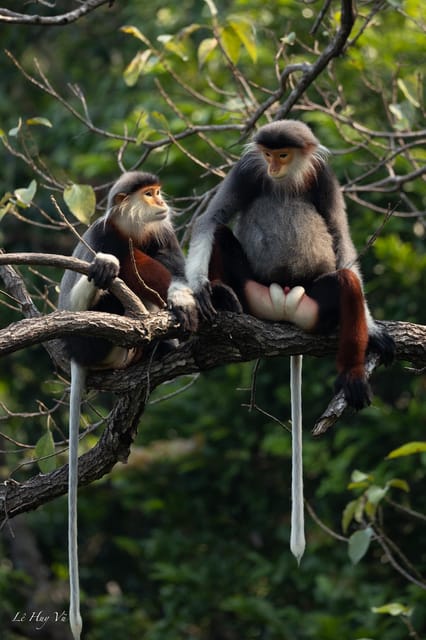
- Red-shanked douc langurs in the wild: Search for adults, alpha males, females, and young monkeys in their natural forest home.
- Motorbike access to remote slopes: Your guide drives you up Son Tra’s mountain roads, then leads short walks into quieter areas.
- Very small group: The trip is limited to five participants, which helps with spotting animals and asking questions.
- Binoculars and snacks included: You receive binoculars for distant monkeys, plus water and fruit during the outing.
- More than a monkey search: Mountain views, forest life, and a secret beach may be part of the route.
- Bring little and expect uncertainty: Leave backpacks and luggage behind, and remember that weather, animal behavior, and luck control the sightings.
Why the red-shanked douc langur is worth seeking
Many wildlife outings promise a rare animal and then deliver a quick glimpse, if anything. This one is built around the search itself. The red-shanked douc langur is shy, lives high in the forest canopy, and does not pose neatly for visitors. Spotting one often means scanning branches with binoculars, following a guide’s sharp eyes, and waiting quietly.
That effort is part of the value. You are not visiting a small enclosure or a feeding station. You are looking for a wild primate in Son Tra, the forested mountain area beside Da Nang. The trip gives you a close look at the animal’s habits without turning the encounter into a noisy crowd scene.
The guides explain how to tell a male from a female and how to estimate an animal’s age. You may see adults, breeding-season youngsters, or an alpha male. The focus is not just on getting a photograph. You also learn how sightings are recorded and can help collect basic information about the monkeys you encounter.
That makes the experience a good fit for anyone who wants wildlife context, not only a checklist sighting. You will still want a monkey encounter, of course. Just keep your expectations honest. The forest decides what you see.
A few more Da Nang departures worth comparing
- Da Nang/Hoi An: My Son Sanctuary and Marble Mountain Tour
★ 4.4 · 306 reviews - My Son Sanctuary Guided Tour with Rice Paper Making from Da Nang
★ 5.0 · 115 reviews - Da Nang: Full-Day My Son Sanctuary Tour
★ 4.5 · 109 reviews
From Esco Beach Bar to Monkey Mountain
The listed meeting point is in front of Esco Beach Bar in Da Nang. This is especially useful if you are coming from Hoi An or do not have a pickup point in Da Nang. The activity ends back at the same meeting point.
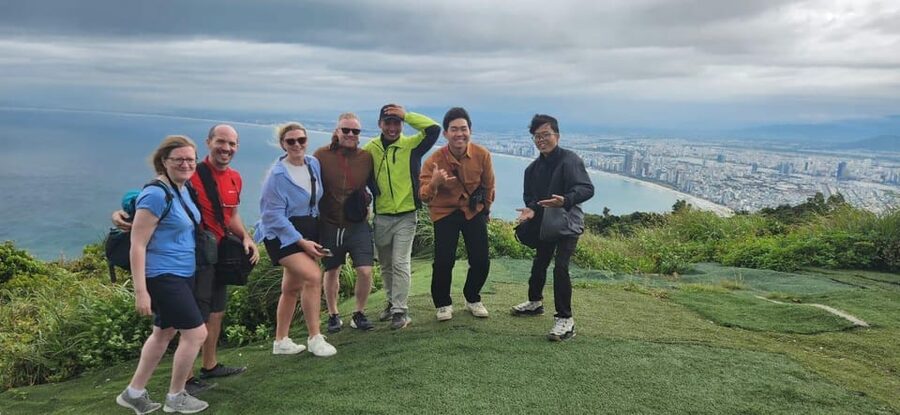
The trip uses motorbikes rather than a large vehicle. Your guide acts as your private driver, taking you along twisting mountain roads and toward less-used slopes in Son Tra Nature Reserve. This transport is not just a way to get from one stop to another. It gives the outing its sense of movement and helps the group reach areas that would take much longer on foot.
You should travel light. There is no room for a backpack or luggage, so bring only the essentials you need for a short outdoor outing. Cameras are welcome, but they are not supplied. A phone or compact camera is easier to manage than a large bag of equipment.
The ride also deserves a practical note. Several participants have singled out Cillian’s careful driving, and guides such as Tam, Binh, and Huy have been praised for spotting monkeys and handling the outing with care. Still, this is a motorbike trip on mountain roads. If you feel nervous as a passenger, tell the guide before setting off so expectations are clear.
Searching the forest slopes on foot
After the motorbike sections, you walk into quieter parts of the forest. The description calls this an easy stroll, but it also refers to a route lasting about three hours, while the booking information lists the activity at two and a half hours. I would plan for roughly the advertised 2.5 hours and confirm the exact timing when you reserve.
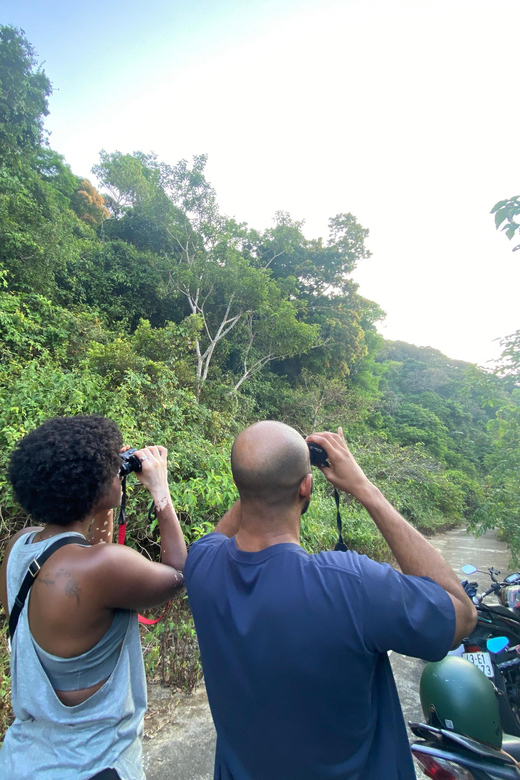
The walking is less about covering a fixed distance and more about moving slowly, stopping often, and checking the trees. A guide may spot a monkey long before you do. This is where binoculars matter. Red-shanked douc langurs can sit high above the road, and a distant animal may be hard to identify with the naked eye.
The quiet pace also protects the animals. The guides keep a safe distance and avoid pushing too close for a better photograph. That is exactly the right approach with a shy endangered species. You may not get the close-up image you imagined, but you have a better chance of seeing natural behavior.
Look beyond the monkeys, too. The outing can bring sightings of birds, colorful butterflies, plants, and sometimes a mongoose. These are supporting players, but they make the forest search more rewarding when the langurs stay hidden.
Meeting the forest photographers
One unusual part of the outing is the chance to speak with local animal photographers along the route. You may see their photographs and hear how they observe the monkeys. That adds a useful human side to the experience, since wildlife photography in this setting depends on patience, distance, and knowing where to look.
It can also reset your expectations. Professional photographs often show a monkey clearly, with perfect light and a clean background. Your own sighting may be a face between leaves or a moving shape across the canopy. That does not make it a poor encounter. It is simply what wild-animal viewing often looks like.
The guides help bridge that gap. Their ability to notice movement and recognize monkey groups is repeatedly praised, especially Tam and Cillian. You still need luck, but a sharp-eyed guide gives you a better chance than searching alone from the roadside.
Same base, a completely different day out:
- Da Nang: Lady Buddha, Marble Mountains, and Am Phu Cave Tour
★ 4.7 · 3,373 reviews - Full Day Golden Bridge and Ba Na Hills Small Group Tour
★ 5.0 · 2,369 reviews - From Da Nang/Hoi An: Golden Bridge Ba Na Hills Full-Day Tour
★ 4.7 · 1,737 reviews - Da Nang: Han River Local Cruise by Night
★ 4.1 · 1,152 reviews
Views, slopes, and the secret beach
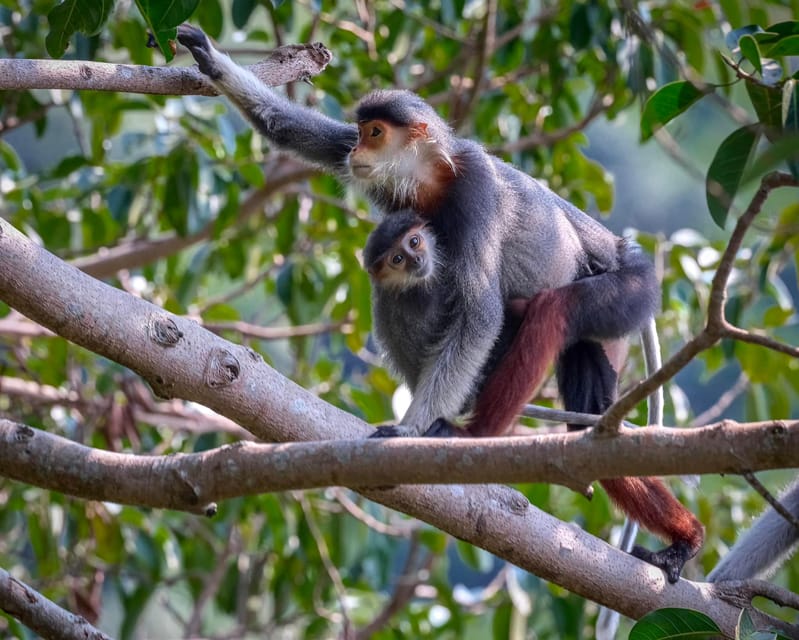
The trip is not only about primates. The route uses several quiet mountain slopes, and the scenery from Monkey Mountain can be a strong part of the outing even when the animals remain out of sight. You may also visit a secluded beach area, adding a coastal note to the forest ride.
These stops help balance the safari. If the langurs are resting out of view, you are not left with nothing to do. The mountain roads, jungle slopes, and sea views give you a fuller sense of Son Tra than a single roadside stop would.
Do not expect a polished sightseeing circuit with formal platforms and long explanations at every point. This is an off-road style nature outing, shaped by the location of the monkeys and the conditions on the day. That is appealing if you prefer a flexible search. It may disappoint you if you want a guaranteed sequence of viewpoints.
What the guides add to the experience
The guide is the key part of this activity. A vehicle can take you up a mountain, but only a good wildlife guide can help you understand what you are seeing. Guides named in the operation include Cillian, Tam, Binh, Huy, Brendan, and Lillian, though the person assigned to you will depend on the date and group.
The strongest praise centers on three things: finding monkeys, explaining them clearly, and driving safely. Cillian is noted for spotting animals quickly and riding with care, including for an older passenger who felt uneasy on a motorbike. Tam is praised for finding males, females, and babies. Binh and Huy are also associated with strong guiding and respectful behavior around the langurs.
The guides also answer questions patiently and explain the difference between sexes and age groups. That turns a fleeting sighting into something you can interpret. A monkey in a tree becomes part of a social group, a family, or a breeding-season story rather than just a colorful animal in the distance.
English is the listed guiding language. The small group makes it easier to hear explanations, ask for another look through the binoculars, and tell your driver if you need a pause.
Sunset timing and what to bring
This is described as a sunset safari, but the exact starting time depends on availability. Check the time before booking, since the light and temperature will shape the outing.
Bring a camera if you want your own photographs. Cameras are not included, but professional images taken by the guides may be shared through a link after the trip. That is a useful bonus, especially if the monkeys remain too far away for a phone camera.
The activity provides binoculars, water, and fruit snacks. You do not need to carry a large supply for a short trip, but comfortable clothing and sensible footwear are wise for the walking sections. The important packing rule is to travel light. Backpacks and luggage cannot be stored on the motorbikes.
Alcohol and drugs are not allowed. Children under five are not permitted, and the activity is not suitable for people over 220 pounds, or 100 kilograms. Participants between 85 and 100 kilograms must pay an extra 250,000 Vietnamese dong because a more powerful motorbike is needed for the hill roads.
Is $48 good value?
At $48 per person, this is not the cheapest way to spend an afternoon in Da Nang. You are paying for a small group, a private motorbike driver, access to remote parts of Son Tra, binoculars, drinks, fruit, guiding, and a wildlife search that would be difficult to arrange on your own.
The price makes more sense if you value expert eyes and a small group. A large vehicle would be less nimble on the mountain roads, and a self-guided visit would give you little chance of identifying a monkey high in the trees. The included binoculars also save you from buying or carrying your own pair.
The value depends heavily on your attitude toward uncertainty. If your only goal is a guaranteed close-up photo, $48 may feel expensive on a day when the monkeys stay hidden. If you appreciate the forest, the mountain views, and the chance to help record sightings, the experience offers more than a simple animal photo stop.
There is also a listed Lunar New Year service charge of 300,000 Vietnamese dong on the spot from January 28 to February 1, 2025. Check the date and current conditions before booking, since holiday charges and availability can change.
Who should book this safari?
I would choose this for adults, couples, solo visitors, and older children who are comfortable with a short outdoor outing and a motorbike ride. It suits people who enjoy watching animals patiently and who can accept that wild creatures follow their own schedule.
It is especially appealing if you have already seen Da Nang’s beaches and city sights and want a quieter look at the area. The combination of mountain roads, forest walking, local photographers, coastal views, and endangered monkeys gives the trip a strong sense of place.
I would think twice if you dislike riding as a passenger, need to carry a daypack, or want a fixed timetable with guaranteed sightings. The trip is also a poor match for anyone unable to walk through remote forest areas or for children under five.
Practical details before you reserve
The listed price is $48 per person, and the group is limited to five. You can reserve now and pay later, which helps if your Da Nang plans are still moving around. Free cancellation is available up to 24 hours in advance for a full refund.
The meeting point is in front of Esco Beach Bar in Da Nang, with the activity ending there. If you are staying in Hoi An, make sure you can reach the meeting point, since the stated meeting arrangement is based there.
The activity is described as 2.5 hours, while the walking description refers to an easy three-hour stroll. Confirm the final duration and starting time when checking availability. Small inconsistencies like this are easy to clear up before you go.
Should you book the Son Tra monkey safari?
Book it if you want a thoughtful wildlife outing rather than a guaranteed animal show. The strongest reasons are the tiny group, careful guides, motorbike access to quiet Son Tra slopes, and the chance to see one of the world’s rarest primates in the wild.
Go with patience. You may see several groups, babies, males, and females, or you may spend more time enjoying the forest and views while the langurs remain out of sight. I consider that an honest trade for a respectful encounter with a critically endangered animal.
Pack light, check the timing, and make sure you are comfortable on a motorbike. If those conditions suit you, this is one of Da Nang’s more unusual nature experiences, with real value beyond the photograph.
FAQ
Where does the safari start and finish?
It starts in front of Esco Beach Bar in Da Nang and ends back at the same meeting point.
How long does the activity last?
The booking information lists a duration of 2.5 hours. The trip description refers to an easy stroll of about three hours, so confirm the exact timing when you check availability.
Are monkey sightings guaranteed?
No. Seeing red-shanked douc langurs depends on weather, monkey behavior, and luck. The guides work to find them, but sightings cannot be guaranteed.
What is included?
The trip includes binoculars, water, fruit snacks, motorbike transport, and a guide who also acts as your private driver. Cameras and personal expenses are not included.
Can I bring luggage or a large backpack?
No. There is no space for backpacks or luggage on the motorbikes, so you should travel light.
Is the safari suitable for children and larger participants?
Children under five are not permitted. The activity is not suitable for people over 100 kilograms, or 220 pounds. Participants weighing between 85 and 100 kilograms must pay an additional 250,000 Vietnamese dong for a more powerful motorbike.
Just added around Da Nang
- From Da Nang: Ba Na Hills Golden Bridge Private Tour & Lunch★ 3.3 · 3 reviews
- Golden Bridge- BaNa Hills & Marble Mountain By Private Car★ 4.7 · 3 reviews
- Best Tour/Transfer to Hue Imperial City from Da Nang/ Hoi An★ 5.0 · 3 reviews
- Danang Private Guided Night Tour and Bar★ 5.0 · 3 reviews
- Hot Mineral Mud Bath in Da Nang★ 3.5 · 3 reviews
- Da Nang: BaNa Hills & Golden Bridge Day Tour With 5 options★ 5.0 · 3 reviews
- Danang Food City Tour by Motorbike – Private Tour★ 5.0 · 3 reviews
- Da Nang: Da Nang Charming show ticket★ 4.6 · 3 reviews
Wildlife and Nature, compared.
My Son Sanctuary Guided Tour with Rice Paper Making from Da Nang
Read our review →
From Da Nang or Hoi An: Bach Ma National Park Trek & Lunch
Read our review →
Private guided My Son Sanctuary and Marble Mountains
Read our review →
My Son Sanctuary and Marble Mountains from HOI AN OR DA NANG
Read our review →
Guided Private My Son Sanctuary from Hoi An or Da Nang
Read our review →Browse the lists this tour appears in