
Reviewed · INSTAGRAM AND PHOTO TOURS
Danang On the Waterfront Photo Tour
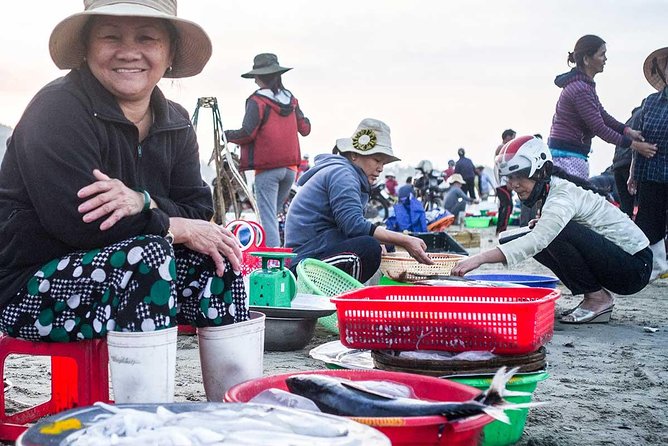
The best part of this early start is the access to Da Nang’s working waterfront, before the city is fully awake. Fishermen return from the East Sea in tiny round coracle boats, while traders sort the overnight catch on the beach. You are not simply pointing a camera at a scenic view. You are learning how to tell a story with people, motion, light, and place.
I like the private format, since your guide can focus on your camera and your way of seeing. I also like the planned photo review over coffee, a useful pause that turns a morning of shooting into a real lesson. The drawback is plain: a 5:30 am start is demanding, and the tour depends on good weather.
In This Review
- Key points to know before booking
- Why the waterfront is worth a 5:30 am start
- One hour on Da Nang city beach
- Coffee, feedback, and the move to Da Nang Harbour
- Inside the docks with the ice crews
- What the guide adds to the morning
- The price and what you receive for $122.06
- Who will get the most from this tour
- Practical details for a smoother morning
- Should you book the Da Nang waterfront photo tour?
- FAQ
- What time does the tour start?
- How long does the experience last?
- Is hotel pickup included?
- Is this a private tour?
- What will I photograph?
- Is food or drink included?
- What happens if the weather is poor?
Key points to know before booking
- Tiny coracle boats and a dawn fish market: Start on Da Nang city beach as fishermen bring in their catch.
- A working harbour, not a staged photo set: Photograph people loading ice and preparing boats at the docks.
- Private photography tuition: Your guide can adjust the advice to your skill level and equipment.
- A useful coffee and photo review: Stop in the waking city to look at early images and discuss what worked.
- Hotel pickup and drop-off: This makes the very early start easier to manage.
- Four hours at $122.06 per person: The price makes the most sense if you want instruction, not just transport to a viewpoint.
Why the waterfront is worth a 5:30 am start
Da Nang is often sold through its beach, bridges, and skyline. This tour shows you another side of the city: fishermen finishing a night at sea, dock workers moving supplies, and traders handling the first business of the day.
That timing matters for photography. The light changes quickly before and after sunrise, giving you a short lesson in exposure, contrast, and color without needing a classroom. You will also face the harder part of documentary photography: scenes do not wait while you prepare.
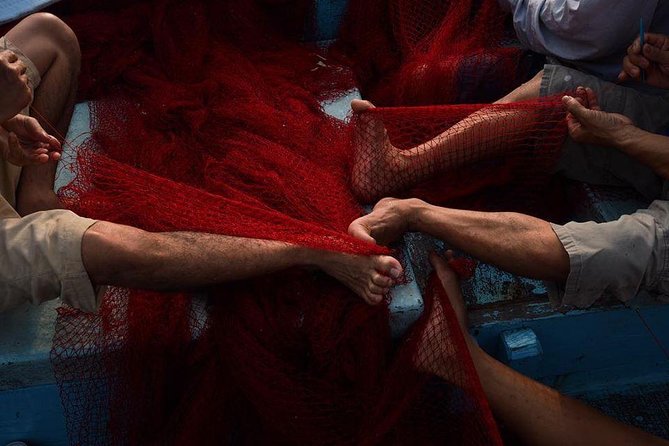
A guide can help you decide what deserves your attention. Should you frame one coracle boat against the open water? Should you wait for a worker to cross a shaft of light? Should you include the skyline, or crop it out and focus on hands, nets, baskets, and movement?
Those choices are more valuable than a list of camera settings. The point is to leave with a better sense of how to make an image say something.
The early start also keeps the experience tied to local working life. You are not visiting a waterfront after the work is done. You arrive as the catch comes in and continue into the harbour while crews prepare for the next trip.
More photo tours in Da Nang:
- 3 Hour Golden Bridge Photoshoot in Ba Na Hills
★ 5.0 · 21 reviews - ️ Danang Instagram Tour: Most Famous Spots (Private & All-Inclusive)
★ 5.0 · 21 reviews - Da Nang: Private & All-Inclusive Instagram Tour
★ 4.7 · 19 reviews
One hour on Da Nang city beach
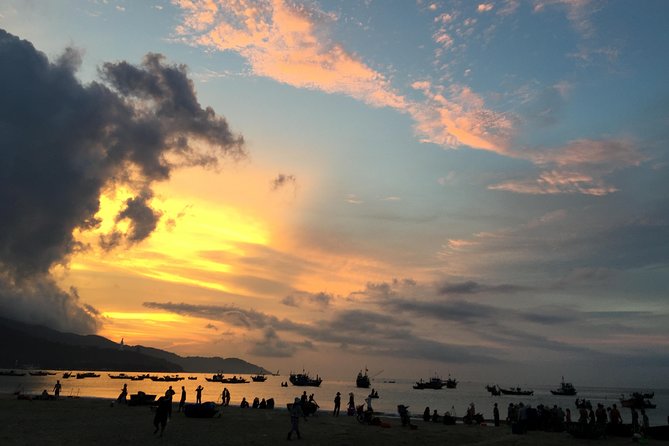
The first stop takes place on Da Nang city beach, where fishermen return with their overnight catch. The small coracle boats are an immediate subject. These round Vietnamese boats sit low on the water and create strong shapes against the sea, especially when several are spread across the tide.
On shore, traders sort and sell the catch. This gives you more than one type of picture. You can work with wide views of the beach, tighter details of fish and baskets, and human interactions as the morning market takes shape.
Your guide’s role here is to help you work quickly and respectfully. A dockside scene changes in seconds. A boat turns, a basket moves, or a person steps into a better patch of light. You will need to decide whether to shoot first and refine later, or wait for a cleaner frame.
This is a useful place to practice documentary composition. Look for relationships between people and objects. A worker beside a pile of fish tells a different story from a close-up of the fish alone. A boat surrounded by empty water gives a different feeling from one framed by several other boats.
The beach stop is listed as having free admission, and the tour includes a professional photographer guide. You should still expect the morning to feel practical rather than polished. Fish markets can be wet, crowded, and messy. That is part of what makes the setting useful, but it may not suit you if you want a quiet, carefully arranged photo walk.
The main challenge is the light. Early morning can be soft and forgiving, but it can also be dim or change rapidly. One previous participant had rain throughout a visit and still received advice on working in low light and black and white. That is a good reminder to treat cloudy weather as a photographic condition, not an automatic failure.
Coffee, feedback, and the move to Da Nang Harbour
After the beach, you head through the waking streets toward Da Nang Harbour. The schedule allows about an hour and 15 minutes for this section, including a quick coffee stop and a review of some photographs.
This break is one of the strongest parts of the experience. It gives you time to look at your images while the advice is still fresh. You can see which frames have a clear subject, which are weakened by distractions, and which might work better in black and white.
A short review can also help you correct mistakes before the second half. Perhaps you have been placing every subject in the center. Perhaps you are using a wide frame when a tighter view would say more. Perhaps your shutter speed is too slow for moving people. This is when you can ask direct questions and then test the answers at the harbour.
The coffee is not presented as a full meal, and food and drinks are not included in the tour price. Think of it as a brief stop during the lesson, not a breakfast outing. If you need food early in the morning, plan around that yourself.
The transition through the city adds useful context. You move from the open beach to the harbour, from catching fish to handling the supplies and equipment that support the boats. The photographic story becomes broader without losing its focus on work.
Inside the docks with the ice crews
The final main stop takes you into the harbour, where workers shuttle and load ice for the boats. This is a strong setting for photographs built around action and relationships.
Ice is practical, physical material. Workers carry it, stack it, and move it toward the boats. Those tasks create lines, repeated shapes, and moments of effort. You can look for frames that show not only a person at work, but also the connection between the worker, the ice, the boat, and the harbour.
Your guide will work with you on how to build a story around people’s jobs. That may mean making a series rather than chasing one perfect image. A wide frame can establish the dock. A medium frame can show a worker and a boat. A close frame can focus on a hand, a tool, or the texture of the ice.
This approach is especially useful if you normally photograph buildings, sunsets, or posed portraits. Working people do not stop and arrange themselves for you. You must watch, anticipate, and make decisions without getting in the way.
The harbour is also where the private format matters most. You can ask for help with a specific camera setting, lens choice, or composition problem. A larger group would make that harder, while this activity is limited to your own party.
You should keep your expectations realistic. The experience provides access to working waterfront scenes, not a guarantee that every boat or worker will be in a perfect position. Documentary photography depends on timing. Some frames will fail. That is normal, and the guide’s feedback helps you understand why.
Same base, a completely different day out:
- Da Nang: Lady Buddha, Marble Mountains, and Am Phu Cave Tour
★ 4.7 · 3,373 reviews - Full Day Golden Bridge and Ba Na Hills Small Group Tour
★ 5.0 · 2,369 reviews - From Da Nang/Hoi An: Golden Bridge Ba Na Hills Full-Day Tour
★ 4.7 · 1,737 reviews - Da Nang: Han River Local Cruise by Night
★ 4.1 · 1,152 reviews
What the guide adds to the morning
The guide is a professional photographer, but the important point is how that skill is used. You are not simply led from one location to another. The teaching covers changing morning light, fast-moving scenes, composition, and the process of reviewing your images.
Past experiences with Vietnam in Focus have featured guides named Thomas and Cristian Sorega. Thomas helped one participant work through rain, low light, and black and white photography. Cristian was praised for giving hands-on advice that continued to influence the participant after the tour. Your assigned guide may be different, but these examples show the type of support the experience aims to provide.
You do not need to be an expert to benefit. Beginners can learn how to look for a subject and handle changing light. More experienced photographers can use the morning to sharpen documentary technique and receive a second opinion on editing choices.
The guide’s local understanding matters as much as camera skill. At a fishing harbour, it helps to know where the work takes place and when the action is likely to happen. It also helps you approach a working environment with care instead of treating people as background decoration.
The price and what you receive for $122.06
At $122.06 per person, this is not a cheap sightseeing transfer. You are paying for a private, four-hour photography lesson with hotel pickup and drop-off, rather than admission to a major attraction.
The value depends on your goal. If you only want a few waterfront photos, you can visit Da Nang’s public areas at no charge. If you want to improve how you photograph people, motion, and early light, the private instruction gives the price more weight.
The coffee and photo review also help the value. Many photo walks give you a location and a guide, then end when the pictures are taken. Here, you get time to examine the results and use that feedback before the harbour portion.
The price may feel easier to justify for two photographers who can share the experience, especially since group discounts are offered. You should check the final group rate when booking, as the amount per person may change with party size.
The tour is booked, on average, 76 days ahead. That suggests you should reserve early if the date matters to you, especially during a short Da Nang stay. The activity has only a small number of published ratings, so I would treat the perfect score as encouraging but not as a reason to ignore the practical details.
Who will get the most from this tour
I would choose this for you if photography is a central part of your trip, not just an occasional holiday activity. It suits people who want to learn through real scenes and do not mind getting up before dawn.
It is also a good match if you enjoy human stories. The beach and harbour focus on work, trade, boats, supplies, and movement. You will spend less time on postcard views and more time watching how the waterfront functions.
The private setup makes it suitable for mixed skill levels. One person can ask basic questions while another works on more advanced composition. The guide can also respond to the kind of camera you bring, although the supplied details do not specify camera equipment or whether rentals are available.
I would think twice if you dislike early mornings, need a relaxed breakfast before sightseeing, or want a fixed set of famous Da Nang views. The tour requires moderate physical fitness, and harbour conditions may be active or uneven. No health restrictions are listed, but you should be comfortable moving around for roughly four hours.
Weather is another factor. The tour requires good weather and may be rescheduled or refunded if poor conditions cause cancellation. At the same time, rain and low light can create useful photographs, as one past experience showed. That is not a promise that the tour will run in bad weather, so keep a backup plan.
Practical details for a smoother morning
Hotel pickup and drop-off are included, which is important at this hour. A 5:30 am start can be awkward if you need to arrange transport across the city before sunrise.
Food and drinks are not included. The coffee stop is part of the route, but it should not be treated as a full breakfast. Arrange your morning meal around the tour and bring only what you can manage while photographing.
Wear clothing and shoes suited to a working waterfront. The supplied details call for moderate physical fitness, but they do not specify the exact walking surface or conditions. Practical footwear is the sensible choice.
Bring the camera and lenses you already know how to use. This is not the time to learn an unfamiliar setup while boats are moving and the light is changing. A phone camera can still record the morning, but a dedicated camera gives you more room to work with low light and fast action.
The mobile ticket is convenient, and confirmation is provided at booking. Cancellation is free up to 24 hours before the start time. Inside that window, refunds and changes are not accepted unless the provider cancels because of poor weather, in which case you are offered another date or a full refund.
Should you book the Da Nang waterfront photo tour?
Book it if you want a close look at Da Nang’s fishing economy and practical photography coaching in the same morning. The coracle boats, beach market, ice crews, and harbour activity give you subjects with real purpose, while the private guide and photo review make the experience more than a guided walk.
Skip it if you want a late start, a cheap sightseeing option, or guaranteed sunshine and tidy compositions. For the right person, the cost buys focused instruction and access to a side of Da Nang that many short visits miss. The key question is simple: are you willing to trade sleep for better photographs and a more grounded view of the city?
FAQ
What time does the tour start?
The tour starts at 5:30 am.
How long does the experience last?
The tour lasts approximately four hours.
Is hotel pickup included?
Yes. Hotel pickup and drop-off are included.
Is this a private tour?
Yes. Only your group participates in the private activity.
What will I photograph?
You will photograph fishermen bringing in their overnight catch, tiny coracle boats, the beach fish market, Da Nang Harbour, dock workers, ice being loaded, and views across the Da Nang skyline.
Is food or drink included?
No. Food and drinks are not included. The route includes a quick coffee stop, but the supplied details do not state that the coffee is included in the price.
What happens if the weather is poor?
The experience requires good weather. If it is canceled because of poor weather, you will be offered a different date or a full refund. You can also cancel for a full refund up to 24 hours before the start time.
Just added around Da Nang
- From Da Nang: Ba Na Hills Golden Bridge Private Tour & Lunch★ 3.3 · 3 reviews
- Golden Bridge- BaNa Hills & Marble Mountain By Private Car★ 4.7 · 3 reviews
- Best Tour/Transfer to Hue Imperial City from Da Nang/ Hoi An★ 5.0 · 3 reviews
- Danang Private Guided Night Tour and Bar★ 5.0 · 3 reviews
- Hot Mineral Mud Bath in Da Nang★ 3.5 · 3 reviews
- Da Nang: BaNa Hills & Golden Bridge Day Tour With 5 options★ 5.0 · 3 reviews
- Danang Food City Tour by Motorbike – Private Tour★ 5.0 · 3 reviews
- Da Nang: Da Nang Charming show ticket★ 4.6 · 3 reviews
Instagram and Photo Tours, compared.
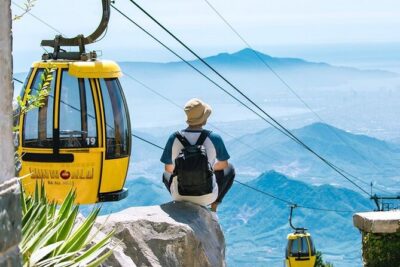
️ Danang Instagram Tour: Most Famous Spots (Private & All-Inclusive)
Read our review →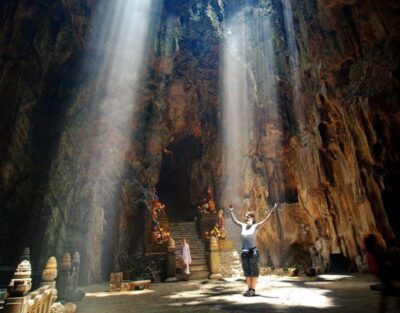
Hoi An Instagram Tour: Most Famous Spots (Private & All-Inclusive)
Read our review →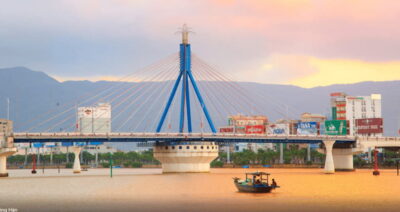
Free E-sim Da Nang: Instagram Half-Day Tour with Local Guide
Read our review →

Browse the lists this tour appears in