

Reviewed · CHAM MUSEUM AND HISTORY TOURS
Da Nang War Tour History: Spanish-French Attack to American Base
Da Nang’s past comes into focus on this long private tour, which links the 1858 French and Spanish attack with later American military sites. You’ll visit Hai Van Tower, the Spanish Cemetery, Son Tra’s former radar station, and a wartime landing zone, while still making time for Marble Mountains and the Cham Sculpture Museum.
I like the clear historical thread, from An Nam defenses near Hai Van Pass to the American base on Son Tra. I also like the private format: your own group travels by car, and the guide can spend more time explaining places that would get only a quick stop on a large bus tour.
The main drawback is the pace. Nine to 10 hours is a full day, and the tour combines mountains, museums, religious sites, military history, and city driving. Admission fees also depend on the option you book, so check the exact package before paying.
In This Review
- Key points to know before booking
- A full day tracing Da Nang’s military past
- Marble Mountains: caves, temples, and stone carving
- Hai Van Pass and the tower built against attack
- Son Tra Peninsula and the American radar station
- The Spanish Cemetery and the cost of the 1858 campaign
- Lady Buddha at Bai But Pagoda Complex
- Cham Sculpture Museum and Da Nang’s oldest cultural layer
- How the private format changes the experience
- Is $29 a good value?
- Who will enjoy this Da Nang tour most?
- Practical details before you reserve
- Should you book the Da Nang War Tour?
- FAQ
- How long does the Da Nang War Tour last?
- Is this a private tour?
- What places are included in the route?
- Is transportation provided?
- Are entrance fees included?
- Can I cancel for a refund?
Key points to know before booking
- The 1858 attack is central: Hai Van Tower and the Spanish Cemetery help explain the French and Spanish campaign against Hue.
- Son Tra offers unusual wartime sites: You’ll see the former American radar area, known as the Magic Eyes of Indochina, and a landing zone used during the Vietnam War.
- Marble Mountains adds culture and climbing: Expect caves, temples, views, and a look at Da Nang’s stone-carving tradition.
- It is a private tour: Only your group takes part, with an English-speaking guide and private-car transport, depending on the option.
- The day covers several different eras: Champa sculpture, Vietnamese royal defense, colonial warfare, and the American war all appear in one route.
- The $29 starting price can be good value: It is strongest when your option includes transport and the listed entrance fees, so confirm what is covered.
A full day tracing Da Nang’s military past
This is not a simple city sightseeing loop. The tour treats Da Nang as a place shaped by several conflicts and powers: Champa kingdoms from the medieval period, struggles between northern and southern Vietnamese states in the 17th and 18th centuries, the French and Spanish attack in 1858, and the American military presence during the Vietnam War.
That broad scope is useful because Da Nang’s war history is spread across the region. You are not looking at one museum display and then returning to town. Instead, the stops put the history in place. A mountain pass shows how Hue could be approached. A cemetery records the cost of the first attack. A radar site explains why Son Tra mattered to American forces.
The day also includes major cultural sights. That makes the route more varied, but it means the tour is not devoted only to battlefield remains. If you want a tightly focused military tour with long time at each site, this may feel too broad. If you want history, scenery, religion, and art in one day, the mix works well.
More Cham and wartime history tours:
- Da Nang Epic History Tour by Cham Museum & Tasty Cuisine/Cafe
★ 5.0 · 15 reviews - Da Nang History Tour Walking By Cham Pa Museum-Cuisine-Cafe
★ 5.0 · 5 reviews - MY LAI MASSACRE Tour from Hotel in Da Nang City or Hoi An City ( Private Tour )
★ 5.0 · 4 reviews
Marble Mountains: caves, temples, and stone carving
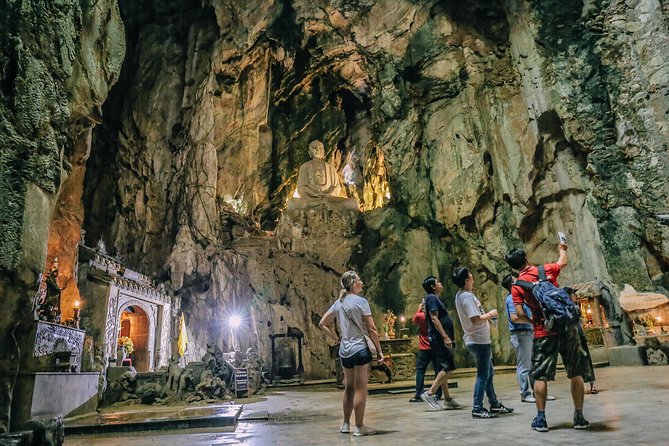
The first stop is Marble Mountains, one of Da Nang’s best-known attractions. You’ll spend about two hours among caves and temples that have been used for centuries. The site gives you a strong introduction to the area before the tour turns toward military history.
The mountain is valuable for more than its views. Inside the caves, religious shrines and unusual rock spaces show how natural formations became places of worship. You’ll also learn about local sculpturing activity, a craft closely linked with the mountain area.
This stop requires some walking and may include steps or uneven ground around the caves and temples. The tour data does not give a detailed mobility assessment, so ask the operator if you need specific access information. Wear practical shoes and keep your schedule flexible. Two hours can pass quickly here, especially if you want photographs and time to listen to the guide.
Marble Mountains is also a good place to ask questions about how the region’s spiritual and artistic traditions connect with its political past. The tour does not treat Da Nang as only a wartime destination. That wider view is one of its strengths.
Hai Van Pass and the tower built against attack
The drive to Hai Van Pass changes the setting from city and coast to a high route between Da Nang and Hue. You’ll spend about two hours at the pass, including a visit to Hai Van Tower and an explanation of how to reach the peak.
The tower is presented as part of An Nam’s effort to stop a French attack on Hue in 1858. That gives the famous pass a sharper meaning. You are not simply stopping for a scenic photograph. You are looking at a defensive position tied to the same campaign that later connects to the Spanish Cemetery.
The pass is one of the tour’s best history lessons because the geography does some of the teaching. A high route between Da Nang and Hue naturally matters to armies, trade, and communications. From here, your guide can explain why control of the route affected access to the imperial capital.
The tour’s wording suggests that access to the peak is part of the explanation, but it does not provide a detailed account of stairs, walking distance, or exact restrictions. If you have limited mobility, confirm the walking conditions before booking. Weather can also affect the experience, and poor weather may lead to a new date or a full refund.
Son Tra Peninsula and the American radar station

Son Tra Peninsula is the heart of the Vietnam War portion of the day. You’ll drive to the former American radar area, described as the Magic Eyes of Indochina, and to a landing zone with a helicopter airfield that served during the war.
This is an unusual stop because it focuses on the machinery of war rather than a conventional museum collection. Radar helped monitor air and sea activity, and the elevated position on Son Tra gave the American forces a valuable lookout point. The landing zone adds another piece of the picture, showing how troops, supplies, and aircraft could use the peninsula.
The site is also a good reminder that military history often sits beside ordinary natural beauty. Son Tra is known for its coastal setting and high viewpoints, yet this tour asks you to consider how the same terrain was used for surveillance and military access.
The stop lasts about three hours, making it one of the more substantial parts of the day. Admission is listed as free for Son Tra Peninsula, though transport and access arrangements can depend on the option you select. Your private vehicle matters here because the route links several points that would be difficult to combine independently in one day.
Same base, a completely different day out:
- Da Nang: Lady Buddha, Marble Mountains, and Am Phu Cave Tour
★ 4.7 · 3,373 reviews - Full Day Golden Bridge and Ba Na Hills Small Group Tour
★ 5.0 · 2,369 reviews - From Da Nang/Hoi An: Golden Bridge Ba Na Hills Full-Day Tour
★ 4.7 · 1,737 reviews - Da Nang: Han River Local Cruise by Night
★ 4.1 · 1,152 reviews
The Spanish Cemetery and the cost of the 1858 campaign

On the way down Son Tra, the tour visits the Spanish Cemetery. The site commemorates roughly 400 French and Spanish troops who died in Indochina during the campaign connected with the attack on Da Nang.
This stop gives human scale to the political and military story. Hai Van Tower explains the defensive side. The cemetery shows the losses suffered by the attacking force. Together, the two places help you see that the 1858 conflict was not an abstract opening chapter in colonial history.
The cemetery is likely to be a quieter and more reflective stop than Marble Mountains or Lady Buddha. Your guide’s explanation will matter here, especially because a small memorial site cannot provide the same amount of context as a large museum. One guide associated with this experience is Hung Le, who is noted for patient explanations and for helping with photographs. If he is assigned to your group, you can expect a guide who is comfortable answering questions and allowing time for pictures.
The tour uses the cemetery to connect French and Spanish military losses with the larger story of foreign intervention in Vietnam. That is a useful correction to the common habit of treating the Vietnam War as the only major conflict visitors need to understand.
Lady Buddha at Bai But Pagoda Complex

Lady Buddha is a different kind of stop. The 67-meter statue rises within the Bai But Pagoda Complex on Son Tra Peninsula, and the visit lasts about one hour.
The statue is a major visual landmark and a place of religious importance. After several military sites, the pagoda complex gives the day a calmer rhythm. You can look at the statue, the grounds, and the coastal setting while learning how Buddhist devotion fits into present-day Da Nang.
This stop is included because the tour is not only about destruction and conflict. It also shows the cultural and spiritual places that continue to define the city. The contrast is effective: radar stations and landing zones explain the recent past, while Lady Buddha points toward ongoing religious life.
You should still keep the schedule in mind. One hour is enough for an overview, but not for a slow religious visit or extended photography session. The operator lists admission as included, depending on the option you choose.
Cham Sculpture Museum and Da Nang’s oldest cultural layer
The final listed stop is the Da Nang Museum of Cham Sculpture, with about one hour inside. The museum holds 250 Hindu sculptures connected with the Champa Kingdom and dating from the second through the 17th centuries in central Vietnam.
This museum adds the oldest historical layer on the tour. Before the French, Spanish, and American periods, Champa kingdoms shaped central Vietnam. The sculptures help explain the Hindu traditions and artistic style of a civilization that is easy to overlook when a visit focuses only on modern war history.
I would pay close attention to the guide’s explanations here. Sculpture museums can be hard to read without context, especially when objects come from different centuries and sites. A good explanation of the Champa period makes the rest of the day feel less like a string of unrelated attractions.
The one-hour visit is a sensible introduction, but it is not enough for someone who wants to study every sculpture. If the museum is your main interest, you may want to return separately. For most people, though, this stop gives the tour a strong finish by showing that Da Nang’s story began many centuries before the 1858 attack.
How the private format changes the experience

Only your group takes part, which is a major advantage on a day with this much subject matter. You can ask about military terms, pause for photographs, and spend more or less time at a stop within the limits of the schedule.
A private guide also helps with the route. The tour covers Marble Mountains, Hai Van Pass, Son Tra Peninsula, Lady Buddha, and the Cham Museum. These places are spread across Da Nang and its surrounding roads. A private modern car, included depending on the option, saves you from arranging several separate rides.
Pickup is offered, and the experience provides an English-speaking guide and mineral water. The exact transport arrangement and entrance coverage depend on the option selected. Do not assume that every $29 booking includes every ticket until you read the package details.
The tour is advertised for most people who can participate, but the route includes mountain and temple areas. Anyone concerned about steps, uneven surfaces, or the climb toward Hai Van Tower should ask for current access information before booking.
Is $29 a good value?
At $29 per person, the price is attractive for a private day that can last nine to 10 hours. The value becomes especially good if your chosen package includes private transport, the Cham Museum, Marble Mountains, military museum access if applicable, Hai Van Tower, and the American landing zone.
The important phrase is depending on the option. Entrance tickets are not handled the same way across all packages. Some inclusions are listed as conditional, so compare the exact price with what it covers. You will also pay separately for meals, tips, personal expenses, and travel insurance.
Meals are not included, which is normal for a full-day excursion but worth planning around. The tour information does not name a restaurant or set lunch menu. Bring enough money for food and personal purchases, or ask the operator how the day’s meal break is handled.
Group discounts may improve the value for families or friends. Since this is a private activity, the price can make more sense when divided among several people rather than paid by one solo participant. The average booking lead time is 13 days, so reserve ahead if your dates are fixed.
Who will enjoy this Da Nang tour most?
I would recommend it to you if you want a guided explanation of Da Nang’s wartime past but also want to see major cultural sights. The route suits first-time visitors who prefer one organized day instead of piecing together several distant locations.
It is a good match for:
- History students and families who want an accessible introduction to several periods.
- Visitors interested in the 1858 French and Spanish attack on Da Nang and Hue.
- People curious about American radar and helicopter facilities from the Vietnam War.
- Small groups who value a private car and a guide who can answer questions.
- First-time visitors who also want Marble Mountains, Lady Buddha, and Cham art.
I would hesitate if you dislike long touring days or prefer to spend half a day at one museum. The schedule is ambitious. You will see many places, but some visits are necessarily introductions rather than detailed studies.
The tour also works best when you treat the day as a connected story. If you only want beaches, food, or modern city attractions, the military stops may feel heavy. If you want to understand why Da Nang mattered, the route gives you a useful framework.
Practical details before you reserve
The tour lasts about nine to 10 hours and offers pickup, private participation, and a mobile ticket. Confirmation is provided at booking, and the area is near public transportation, though the private transfer is the more practical way to cover the full route.
The experience requires good weather. If weather forces a cancellation, you will be offered another date or a full refund. It also requires a minimum number of participants, and if that minimum is not met, you will be offered another date, another experience, or a full refund.
You can cancel for a full refund up to 24 hours before the local start time. Changes or cancellations made less than 24 hours before departure are not accepted for a refund.
Pack comfortable footwear, water beyond the provided bottle if you need it, and a camera. Keep your clothing respectful for temple and pagoda visits. Since the day includes open-air viewpoints and mountain sites, weather can affect both comfort and access.
Should you book the Da Nang War Tour?
Book this tour if you want Da Nang’s military story explained on location, from the defenses near Hai Van Pass to the Spanish Cemetery and American radar facilities on Son Tra. The private format, long duration, and English-speaking guide give you more support than a quick hop between photo stops.
The best reason to choose it is the range. In one day, you move from Champa sculpture to Buddhist worship, colonial warfare, and the American military presence. The main compromise is pace, and you should confirm which entrance fees and transport services your chosen option includes.
For a small group with a full day available, $29 per person is a strong starting value. I would book it when history matters to you, but I would choose a shorter or more focused outing if you want a relaxed day with little walking and plenty of free time.
FAQ
How long does the Da Nang War Tour last?
The tour lasts approximately nine to 10 hours.
Is this a private tour?
Yes. Only your group participates in the activity.
What places are included in the route?
The listed route includes Marble Mountains, Hai Van Pass and Hai Van Tower, Son Tra Peninsula, Lady Buddha, and the Da Nang Museum of Cham Sculpture. The Son Tra visit includes the American radar area and an American landing zone, followed by the Spanish Cemetery.
Is transportation provided?
Round-trip transfer by modern private car is included depending on the option selected. Pickup is offered.
Are entrance fees included?
Some entrance fees are included depending on the option. The listed tickets may include the Cham Museum, Military Museum, Marble Mountains, Hai Van Tower, and the American Landing Zone. Check your selected package for the exact inclusions.
Can I cancel for a refund?
You can cancel at least 24 hours before the experience start time for a full refund. Cancellations or changes made less than 24 hours before the start time are not accepted for a refund.
Just added around Da Nang
- From Da Nang: Ba Na Hills Golden Bridge Private Tour & Lunch★ 3.3 · 3 reviews
- Golden Bridge- BaNa Hills & Marble Mountain By Private Car★ 4.7 · 3 reviews
- Best Tour/Transfer to Hue Imperial City from Da Nang/ Hoi An★ 5.0 · 3 reviews
- Danang Private Guided Night Tour and Bar★ 5.0 · 3 reviews
- Hot Mineral Mud Bath in Da Nang★ 3.5 · 3 reviews
- Da Nang: BaNa Hills & Golden Bridge Day Tour With 5 options★ 5.0 · 3 reviews
- Danang Food City Tour by Motorbike – Private Tour★ 5.0 · 3 reviews
- Da Nang: Da Nang Charming show ticket★ 4.6 · 3 reviews
Cham Museum and History Tours, compared.

Da Nang Epic History Tour by Cham Museum & Tasty Cuisine/Cafe
Read our review →
Da Nang History Tour Walking By Cham Pa Museum-Cuisine-Cafe
Read our review →
Cham Museum Hinduism Artstone & Marble Mountain By Private Tour
Read our review →
MY LAI MASSACRE Tour from Hotel in Da Nang City or Hoi An City ( Private Tour )
Read our review →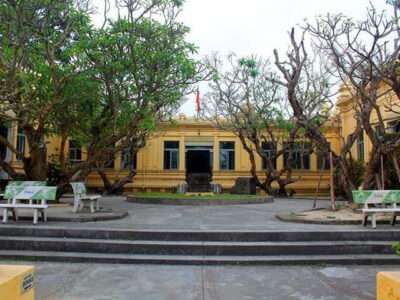
Browse the lists this tour appears in