
Reviewed · CHARMING DA NANG AND AO DAI SHOWS
Da Nang “The Ao Dai” Show: Timeless Vietnamese Elegance
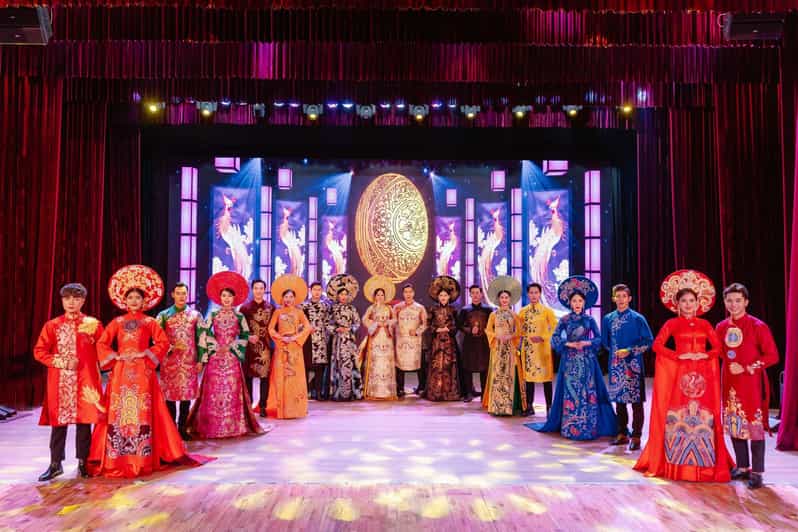
Vietnam’s Ao Dai is more than a pretty dress. At Da Nang’s Ao Dai Show, it becomes the thread linking royal courts, old markets, village weddings, schoolrooms, and modern Vietnam. The performance uses dance, music, costumes, and English text beside the stage to tell that story in about an hour.
I like the range of costumes, from the formal robes of Nguyen Dynasty rulers to the famous white Ao Dai worn by schoolgirls. I also like the clear structure: you can follow the move from palace life to ordinary families without needing a history lecture.
The main drawback is simple: transportation is not included, and the show is best for visitors who enjoy staged cultural performance. If you want a quiet museum visit or a long historical talk, this is not that.
In This Review
- Key points to know before you go
- The story begins with Vietnam’s national dress
- Entering the Nguyen Dynasty royal palace
- Old markets and 300 years of everyday clothing
- A traditional Vietnamese wedding on stage
- The lotus dance brings a quieter change of mood
- White Ao Dai and the image of schoolgirls
- The main Ao Dai presentation ties the eras together
- How clear is the show for English speakers?
- What the $17 price gets you
- Timing, seating, and getting to the venue
- Who will enjoy the Ao Dai Show most?
- Small practical tips for a better visit
- Should you book this Da Nang show?
- FAQ
- Where is the Ao Dai Show held?
- How long does the show last?
- What does the ticket include?
- Is transportation included?
- Is the show available in English?
- Can I cancel or pay later?
Key points to know before you go
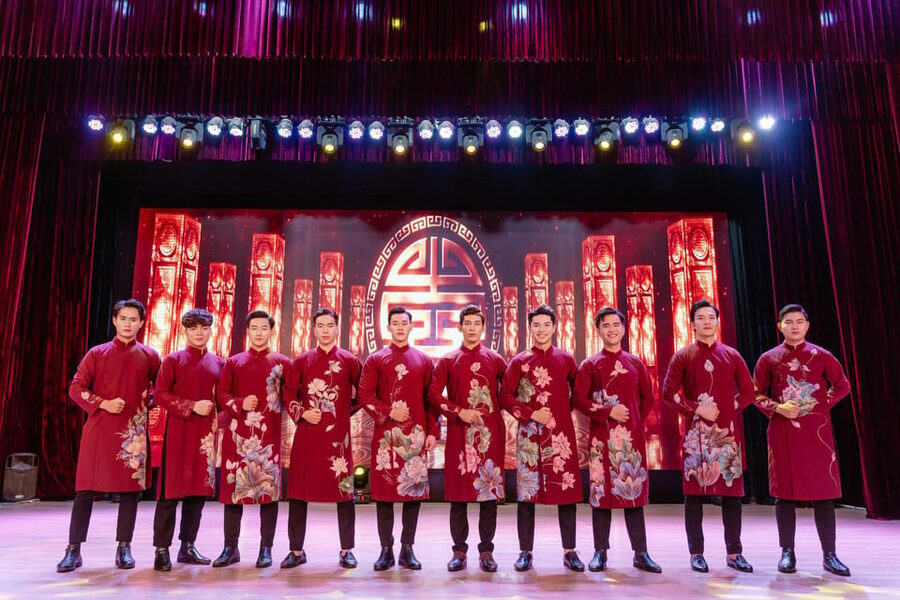
- Nearly 300 years of Ao Dai style: See how Vietnam’s national dress changed from Nguyen Dynasty clothing to modern designs.
- Six distinct performance sections: Expect royal court scenes, an old market, a traditional wedding, lotus dance, schoolgirls in white, and the main Ao Dai presentation.
- English support at the stage: The story is displayed at both sides of the stage, making the action easier to follow.
- A compact one-hour evening plan: The show fits neatly into a Da Nang day without taking over your whole schedule.
- Refreshments and a small gift included: Your $17 ticket covers more than admission, though you arrange your own ride to the venue.
- Interactive touches: The performance can involve the audience, including references to visiting countries.
The story begins with Vietnam’s national dress
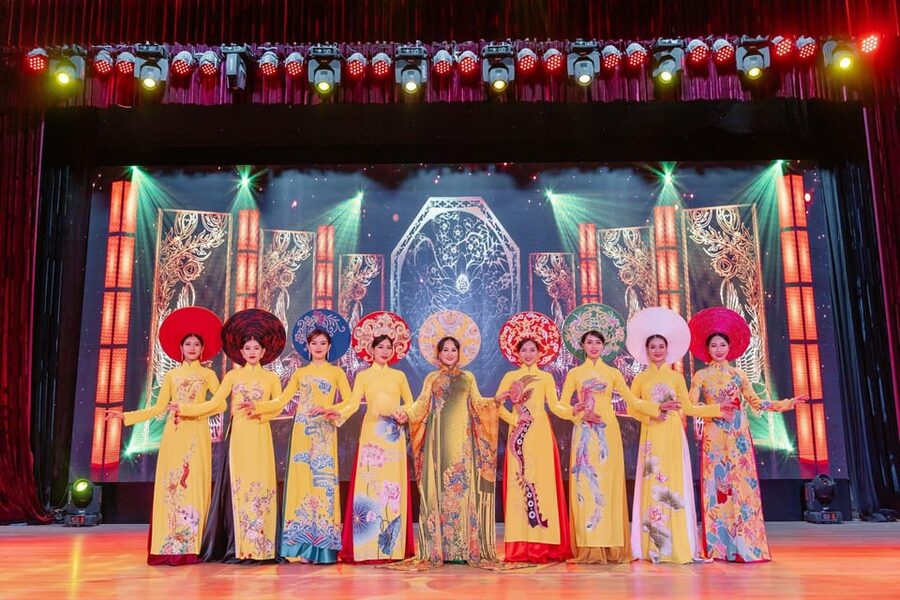
The Ao Dai is usually pictured as a long, fitted tunic worn over trousers. That familiar shape is only part of the story. This performance presents the garment as a marker of social change, showing how clothing connected the royal court, local communities, schools, weddings, and modern public life.
You will not get a dry timeline of Vietnamese rulers. Instead, the show turns each period into a visual scene. The costumes do much of the explaining. A king and his court look formal and ceremonial, while old-market characters appear more modest and practical. Later, the white Ao Dai of schoolgirls brings a softer, more modern image.
That approach works well if you want cultural context without sitting through a long lecture. You can watch the movement and clothing first, then read the English explanation at the sides of the stage when you want more detail.
The production also shows the relationship between the court and ordinary people. The royal section has ceremony and rank. The market section has trade and daily life. The wedding section brings family customs into focus. By the final Ao Dai presentation, the dress feels less like a costume and more like a record of Vietnam’s changing identity.
More Da Nang shows worth an evening:
- Da Nang: Charming Da Nang Show Ticket
★ 4.5 · 113 reviews - Da Nang: Charming Danang Show Ticket
★ 4.9 · 24 reviews - Da Nang: Charming Da Nang Show Ticket
★ 4.8 · 17 reviews
Entering the Nguyen Dynasty royal palace
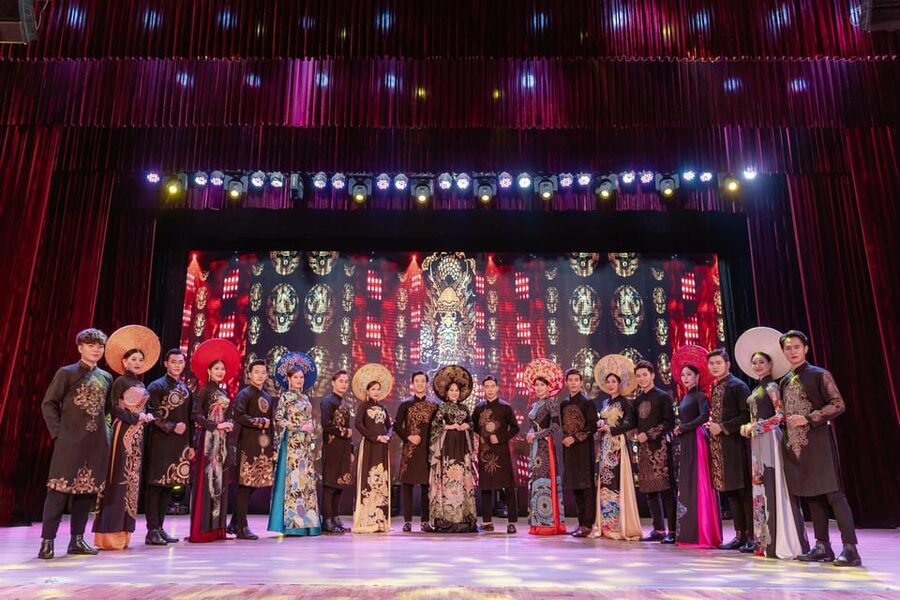
The opening performance, called The Timbre of the Royal Palace, recreates the dignity of the Nguyen Dynasty. Kings, mandarins, empress dowagers, and palace maidens appear in elaborate royal dress, giving you a quick sense of rank and ritual.
This is one of the strongest visual sections. The costumes are made to catch the eye, and the formal poses and movements create a clear contrast with the later scenes of ordinary life. If you enjoy historical clothing, you will want to pay attention here rather than treating the opening as a simple fashion display.
The scene is also useful for first-time visitors to central Vietnam. The Nguyen Dynasty is especially relevant to the region because Hue, not far from Da Nang, was the imperial capital. The show does not replace a visit to Hue’s citadel or royal tombs, but it gives you a small stage version of the court world.
I would keep your expectations sensible. This is a theatrical recreation, not a detailed historical presentation. You will see the mood and visual order of the palace more clearly than you will learn dates, political events, or the names of individual rulers.
Old markets and 300 years of everyday clothing
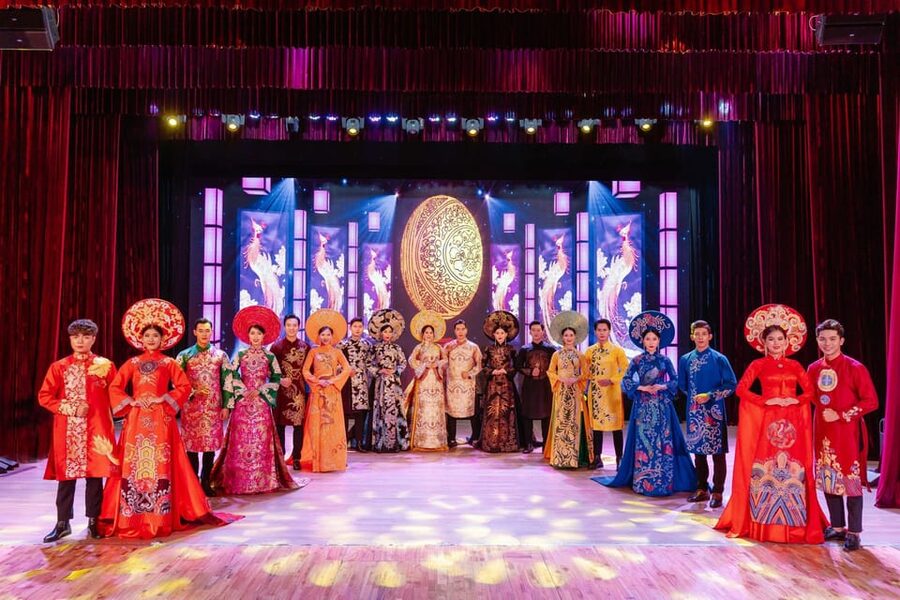
The next major section recreates an old market, presenting Vietnamese life from roughly the 17th to the 19th centuries. People in old Ao Dai appear among the trade activity, giving the scene a more domestic and grounded feel than the palace sequence.
This part matters because it puts the Ao Dai outside elite settings. The clothing is described as simple, humble, elegant, and respectful. That contrast helps you see how Vietnamese dress could carry meaning in ordinary life, not only during court ceremonies.
The market scene also gives the performance a change of pace. After the controlled grandeur of the Nguyen court, you get a picture of work, exchange, and community. The action is still polished for the stage, but the subject is closer to daily life.
For me, this is where the show’s central idea becomes easiest to grasp. The Ao Dai is not frozen in one design or one social class. It changes with the people who wear it and with the setting in which it appears.
A traditional Vietnamese wedding on stage
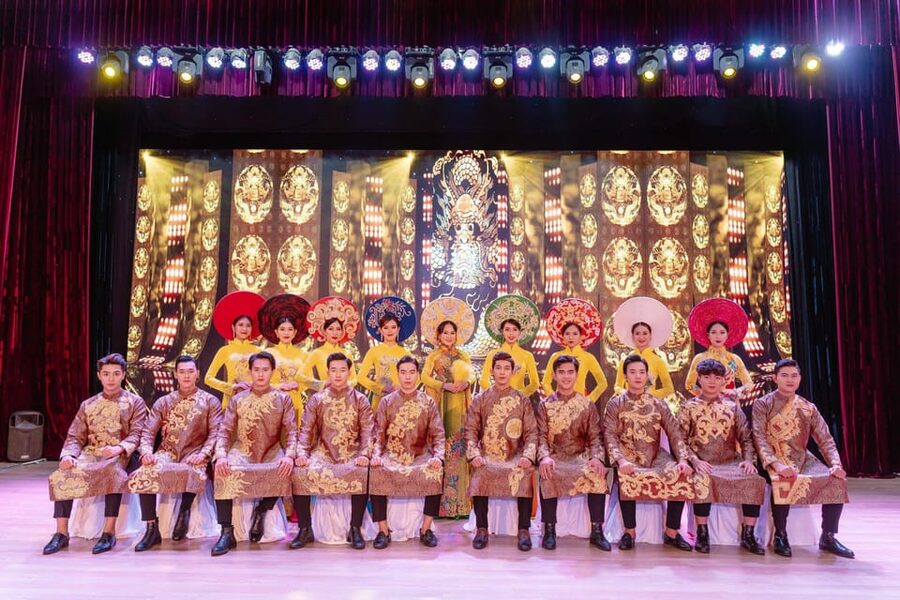
The wedding section presents Vietnamese marriage customs through costume, ritual, and movement. It aims to show both past and present standards, so the scene is not only about romance. It is also about family, ceremony, and social expectations.
This is a useful stop in the show because weddings are one of the clearest ways to see culture in action. Clothing, gestures, and the order of events all carry meaning. Even if you do not know every custom, the formal nature of the scene is easy to read.
The performance does not provide enough detail to serve as a full guide to Vietnamese wedding practice. Instead, it gives you a compact visual introduction. You will come away with a sense of why dress and ceremony matter, especially when compared with the more casual market scenes.
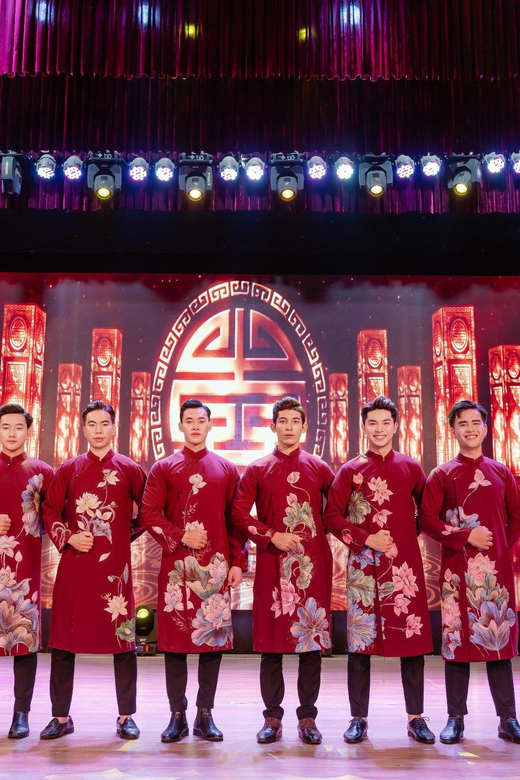
The costumes are a major reason to watch this section closely. The show is strongest when it lets clothing tell the story, and the wedding gives the Ao Dai a social role that is different from both court dress and school uniforms.
Same base, a completely different day out:
- Da Nang: Lady Buddha, Marble Mountains, and Am Phu Cave Tour
★ 4.7 · 3,373 reviews - Full Day Golden Bridge and Ba Na Hills Small Group Tour
★ 5.0 · 2,369 reviews - From Da Nang/Hoi An: Golden Bridge Ba Na Hills Full-Day Tour
★ 4.7 · 1,737 reviews - Da Nang: Han River Local Cruise by Night
★ 4.1 · 1,152 reviews
The lotus dance brings a quieter change of mood
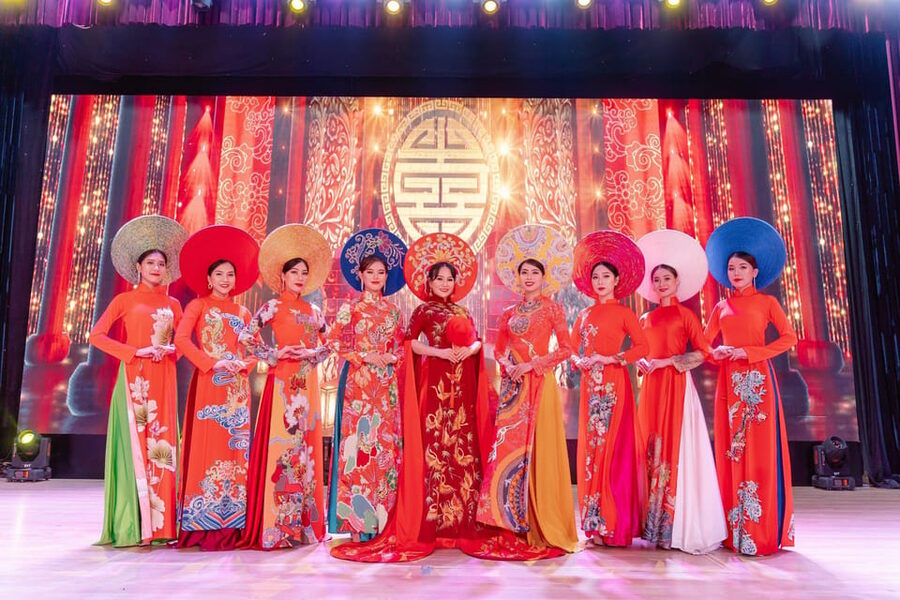
The Lotus Dance is inspired by Vietnam’s national flower. It combines traditional and contemporary dance to express purity and grace, using slow, controlled movements and gentle melodies.
This section gives the program a needed pause. The palace and market scenes explain social worlds. The lotus dance works more through feeling and image. It is less about a specific event and more about the qualities associated with the lotus.
You may find this the most poetic part of the show. It is also the section least tied to a clear historical period, so people looking for facts will get less information here. That is not a flaw, but it is worth knowing. The dance adds beauty and variety rather than another chapter in the timeline.
The lotus is an important national symbol, and the performance uses it to connect clothing, nature, and character. The movements are designed to suggest delicacy without making the segment feel like a separate dance recital.
White Ao Dai and the image of schoolgirls
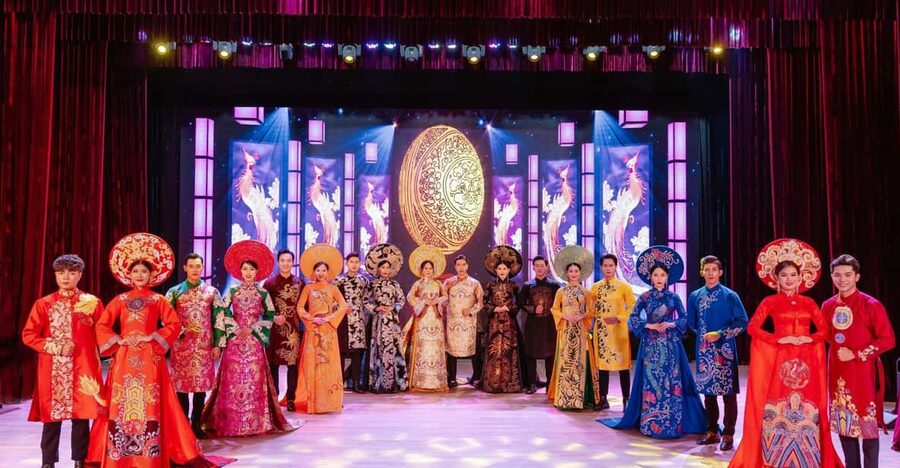
The school-uniform section focuses on Dong Khanh, described as Vietnam’s first girls’ school. The image of female students in white Ao Dai has long been tied to education, youth, restraint, and grace.
This is one of the most recognizable scenes in the production. The white Ao Dai creates a sharp visual change after the colorful royal and wedding costumes. The effect is simple and memorable, which explains why this segment is likely to appeal to anyone interested in photography, fashion, or changing ideas about women’s education.
The show presents these schoolgirls as well-educated, polite, humble, and careful in their communication. It also refers to traditional expectations around childcare and family care. That combination gives you a glimpse of the values attached to women’s schooling at the time, though it also reflects older social roles rather than a complete picture of modern Vietnamese life.
You should treat this scene as a cultural image, not a full account of education in Vietnam. Its job is to show how the white Ao Dai became linked with a particular idea of young Vietnamese womanhood. The costume, posture, and group movement communicate that idea quickly.
The main Ao Dai presentation ties the eras together
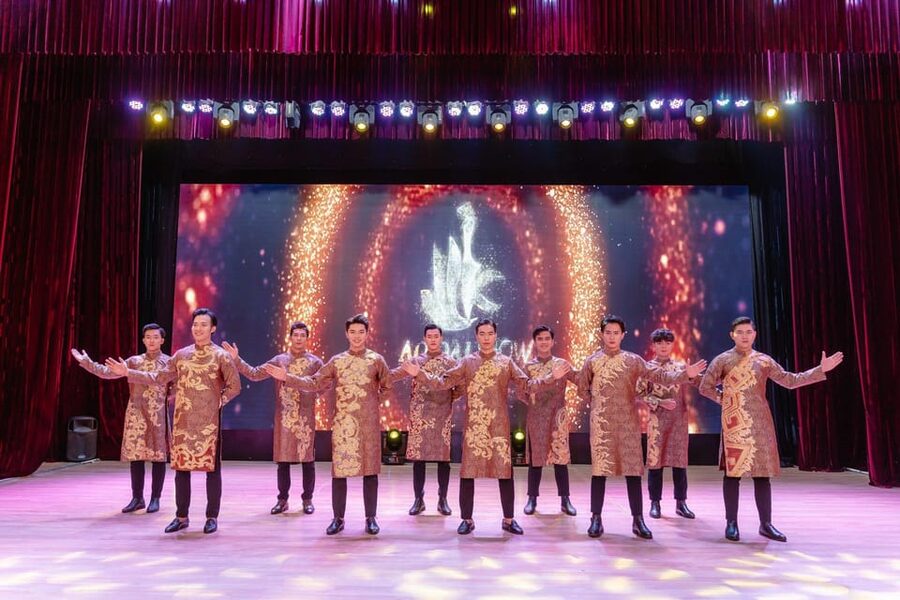
The final Ao Dai Show brings the earlier sections into one presentation. It moves from ancient settings to the present, linking palace life with ordinary communities and traditional dress with modern culture.
This finale is the reason to see the whole program rather than only waiting for the most colorful costumes. By this point, you have seen the Ao Dai in several roles. It has appeared on rulers, market sellers, wedding participants, dancers, and schoolgirls. The final section shows that the garment can carry all those associations while continuing to change.
The show also includes modern fusion, so the ending is not meant to feel like a museum display. Traditional forms remain visible, but the stage presentation is designed for a current audience. The result is more theatrical than academic, with costume and dance doing most of the work.
An interactive element may include each visiting country as part of the performance. That personal touch can make the show feel less like a fixed presentation and more like a shared event. It is a small detail, but it helps explain why the program has appeal beyond its clothing display.
How clear is the show for English speakers?
You do not need Vietnamese to follow the basic story. English narration or written explanations appear at both sides of the stage, so you can check what each scene represents without relying only on gesture and costume.
That setup is practical, though it may divide your attention. If you want to watch the dancers closely, you may not read every line of text. I suggest looking at the explanation when a new section starts, then watching the movement and clothing once you understand the setting.
The host or greeter speaks English. The supplied information does not name an individual guide, and this is not a walking tour with a guide beside you throughout. Think of the English support as help with orientation rather than a private history lesson.
The strongest communication comes from the visual design. Even without reading every word, you can tell when the show has shifted from palace ceremony to the market, wedding, lotus dance, or school setting.
What the $17 price gets you
At $17 per person, the Ao Dai Show is reasonably priced for a short cultural performance. Your ticket includes entry, refreshments, and a small gift. That makes it a simple add-on for a day in Da Nang, especially if you want something more focused than a general evening out.
The value depends on what you want from the experience. If you enjoy costumes, dance, and a clear visual story, the price is easy to justify. You are paying for a professionally organized stage program with several different settings, not just a brief fashion walk.
If your main goal is detailed history, the value is less certain. The show gives you broad cultural context but does not appear designed as a scholarly lecture. You may want to pair it with a museum visit, Hue sightseeing, or another historical stop if you want more dates and political background.
The refreshments and gift are pleasant extras, but they should not decide the booking. The real value is the range of costumes and the chance to see the Ao Dai presented across several periods and social settings.
Timing, seating, and getting to the venue
The venue is the Culture House of Ngu Hanh Son District in Da Nang. Transportation is not included, so you need to plan your own route and allow enough time to arrive.
Be there at least 15 minutes before the scheduled start. You show your name and booking number for entry. One booking experience indicates that assigned seats may be held even when arrival is close to showtime, but I would not rely on that. Arriving early is the safer choice, and it gives you time to settle before the lights go down.
The activity is listed as valid for one day, with starting times depending on availability. Check the current schedule before you build dinner or another timed activity around it.
The performance itself runs for about an hour, based on the stated duration in the experience details and the timing described by a recent audience member. That makes it easy to fit into a Da Nang itinerary. You can enjoy the show without giving up an entire afternoon or evening.
The venue is wheelchair accessible. If accessibility is important to you, confirm the current seating arrangement when booking, since the available information confirms access but does not describe the exact seat layout.
Who will enjoy the Ao Dai Show most?
I would recommend it to first-time visitors who want a quick introduction to Vietnamese culture. It is also a good choice for couples, families, and anyone interested in fashion, dance, stage costumes, or traditional ceremonies.
You may especially like it if you want:
- A visual introduction to Vietnamese history and dress
- A short evening activity in Da Nang
- English explanations without a full guided tour
- Colorful costumes and a polished stage presentation
- A cultural event that works even if you do not speak Vietnamese
- An accessible venue with refreshments included
The show also works well for people who are not normally drawn to cultural performances. Its sections change often, and the costumes give you something concrete to watch. One audience member who had gone mainly to please his wife still found the organization, service, seating, and one-hour format impressive.
It may be less suitable if you dislike staged entertainment or expect a serious historical lecture. The performance simplifies the past and presents cultural values in a polished form. You will get atmosphere, costume, and broad meaning rather than a detailed study of Vietnamese politics or society.
Small practical tips for a better visit
Arrive early, even though late arrival may sometimes be accommodated. The official guidance asks you to be there 15 minutes before the show, and that is the best way to avoid a rushed entrance.
Keep your booking number ready on your phone. You need to provide your name and booking number for access, so having both easy to find saves time.
Read the English text at the start of each section. You do not need to follow every sentence, but a quick look will help you connect each costume and dance to its place in the story.
Watch the transitions between scenes. The value of the performance lies in the comparison between royal robes, old Ao Dai, wedding clothing, white school uniforms, and modern designs.
Give yourself extra travel time to the Culture House of Ngu Hanh Son District. Since transport is not included, the show begins with your arrival plan, not with the first dance.
Free cancellation is available up to 24 hours before the activity for a full refund. You can also reserve now and pay later, which helps if your Da Nang schedule is still changing.
Should you book this Da Nang show?
Book it if you want a polished, one-hour look at Vietnam through dress, dance, and ceremony. The best parts are the colorful costumes, the clear movement from royal court to ordinary life, the white Ao Dai schoolgirls, and the final presentation showing how the garment continues into modern culture.
I would be less quick to book if you want a detailed historical tour or a behind-the-scenes fashion workshop. This is a performance first. Still, at $17 with refreshments and a small gift included, it offers solid value for a compact cultural night out.
Plan your own transport, arrive 15 minutes early, and use the English stage text to follow the sections. If those details suit your plans, the Ao Dai Show is an easy way to add Vietnamese culture to a Da Nang visit without committing half a day.
FAQ
Where is the Ao Dai Show held?
The performance takes place at the Culture House of Ngu Hanh Son District in Da Nang, Vietnam.
How long does the show last?
The experience is designed as a one-hour performance. The activity itself is valid for one day, with starting times based on availability.
What does the ticket include?
The ticket includes entrance to the Ao Dai Show, refreshments, and a small gift.
Is transportation included?
No. Transportation is not included, so you need to arrange your own way to the Culture House of Ngu Hanh Son District.
Is the show available in English?
The host or greeter speaks English, and English explanations are displayed at both sides of the stage to help you follow the story.
Can I cancel or pay later?
You can cancel up to 24 hours before the show for a full refund. Reserve now and pay later is also available, so you do not need to pay at the time of booking.
Just added around Da Nang
- From Da Nang: Ba Na Hills Golden Bridge Private Tour & Lunch★ 3.3 · 3 reviews
- Best Tour/Transfer to Hue Imperial City from Da Nang/ Hoi An★ 5.0 · 3 reviews
- Golden Bridge- BaNa Hills & Marble Mountain By Private Car★ 4.7 · 3 reviews
- Danang Private Guided Night Tour and Bar★ 5.0 · 3 reviews
- Hot Mineral Mud Bath in Da Nang★ 3.5 · 3 reviews
- Da Nang: BaNa Hills & Golden Bridge Day Tour With 5 options★ 5.0 · 3 reviews
- Danang Food City Tour by Motorbike – Private Tour★ 5.0 · 3 reviews
- Da Nang: Da Nang Charming show ticket★ 4.6 · 3 reviews
Charming Da Nang and Ao Dai Shows, compared.
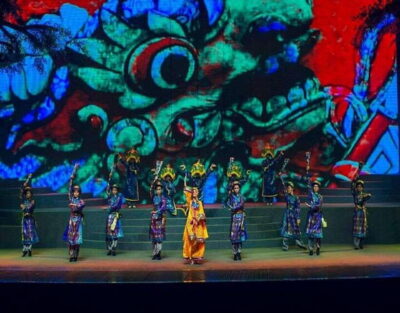
Charming Da Nang Show: Culture, History, Art Vietnamese Show
Read our review →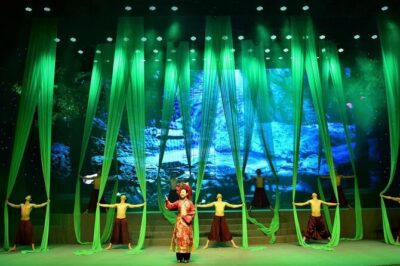
Charming Da Nang Show : Culture-Art-History-LifeStyle of Vietnam
Read our review →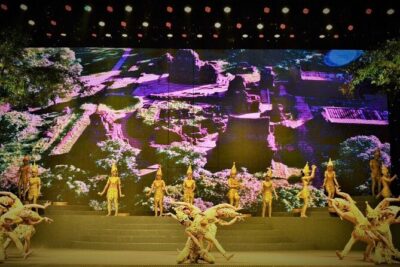
2026 Charming Da Nang Show Ticket with Hotel Pickup
Read our review →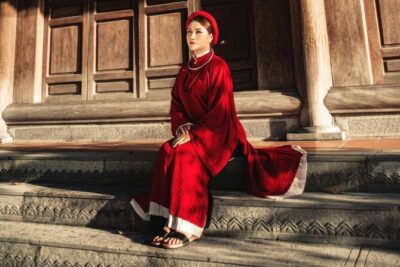
Experience Traditional Vietnamese Costumes at Dong Dinh Museum
Read our review →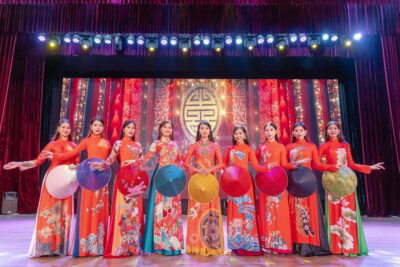
Browse the lists this tour appears in