
Reviewed · DA NANG CITY TOURS
Da Nang & Hoi An: Food, Sightseeing, Culture & Hidden Gems
Hoi An’s lantern-lit lanes and Da Nang’s sea-and-mountain setting make a fine pairing, and this tour fits both into one busy outing. You’ll move by vehicle with a small group of no more than 10, stopping for temples, old houses, coffee, local food, and the views from Son Tra Peninsula.
I like the range of sights packed into the day, especially the switch from Da Nang’s modern Dragon Bridge to the caves and shrines of Marble Mountains, then to Hoi An’s old trading streets. I also like having a guide such as Dat, Thinh, Mee, Kelly, Long, or Tracee to explain what you are seeing and adjust the pace.
The trade-off is time. A 5 to 6-hour estimate is tight for this route, particularly if you want a relaxed Hoi An visit, a meal, and the night market. You’ll see a lot, but this is an orientation tour, not a slow exploration of either city.
In This Review
- Key points at a glance
- Why this Da Nang and Hoi An pairing works
- Starting with My Khe Beach and Dragon Bridge
- A short coffee stop with local flavor
- Marble Mountains: caves, shrines, and stone steps
- Son Tra Peninsula and the Lady Buddha statue
- Entering Hoi An Ancient Town
- Phuc Kien Assembly Hall and Chinese heritage
- The Japanese Covered Bridge and Tan Ky House
- Coffee, food, and the night market
- What the guides add to the day
- Transport, timing, and practical value
- Who should book this tour
- Should you book it?
- FAQ
- How long does the Da Nang and Hoi An tour last?
- Where does the tour begin?
- Where does the tour end?
- Is transportation included?
- How large is the group?
- Is an English-speaking guide included?
- Are entrance fees included?
- Are food and drinks included?
- What places are visited?
- What is the cancellation policy?
Key points at a glance
- See two very different places in one outing: Da Nang gives you beaches, bridges, mountains, and religious sites, while Hoi An supplies old houses, Chinese assembly halls, lanterns, and food stalls.
- Travel in a small group of up to 10: The size makes it easier to ask questions and gives the guide room to respond to your interests.
- Ride in a modern vehicle: Air-conditioning matters in central Vietnam, especially when the day combines outdoor viewpoints, stone steps, and city walking.
- Visit Marble Mountains and Son Tra: These are the most scenic parts of the Da Nang section, with caves, temples, forested mountain views, and the huge Lady Buddha statue.
- Taste local food and Vietnamese coffee: Egg-yolk coffee with condensed milk is one of the tour’s more distinctive food stops.
- Expect a fast introduction to Hoi An: The two-hour old-town visit covers major landmarks, but you may need extra time later if shopping, food, or photography is your priority.
Why this Da Nang and Hoi An pairing works
Da Nang and Hoi An are close on a map but feel quite different. Da Nang is a modern coastal city, with broad roads, high-rise hotels, beaches, and major bridges crossing the Han River. Hoi An has a smaller scale and older character, with timber houses, Chinese religious buildings, narrow lanes, and lanterns for sale.
Doing both independently is possible, but it takes planning. You would need to arrange transport, decide which Da Nang sights deserve time, and work out how to reach Hoi An without losing part of the day. Here, the vehicle and driver handle the connecting roads while the guide provides the local context.
The small-group format is a useful middle ground. You are not paying for a fully private tour, but you also are not being moved around with a large crowd. The maximum group size is 10, and several guides are praised for being flexible with timing and interests. Dat is described as patient and engaging, while Thinh is noted for clear English and strong knowledge of local history. Mee, Anh, Lam, Kelly, and Long also receive specific praise for friendly service and adaptable guiding.
The $72 price includes entrance fees, bottled water, local food and drinks, a modern vehicle with a professional driver, and an English-speaking guide. That makes the price easier to justify than a simple sightseeing transfer. The value is strongest if you want several major stops in one day and would otherwise pay separately for transport, admissions, and a guide.
More Hoi An day trips from Da Nang:
- From Da Nang/Hoi An: Golden Bridge Ba Na Hills Full-Day Tour
★ 4.7 · 1,737 reviews - Marble Mountains – Hoi An Ancient Town Sunset Daily Ingroup Tour
★ 5.0 · 690 reviews - From Da Nang or Hoi An: Ba Na Hills Golden Bridge Tour
★ 4.7 · 618 reviews
Starting with My Khe Beach and Dragon Bridge

The meeting point is The Cups Coffee Roastery at 192 Nguyen Van Thoai in Da Nang’s Bac My Phu area. From there, the tour begins with a look at My Khe Beach and Dragon Bridge.
My Khe runs for about 10 kilometers between the Son Tra Peninsula and Marble Mountains. The beach is more than a quick photo stop. It helps explain Da Nang’s identity as a coastal city, and you may see local fishers heading out to sea. The time here is not listed as a long beach stay, so expect an introduction rather than a swim or a beach morning.
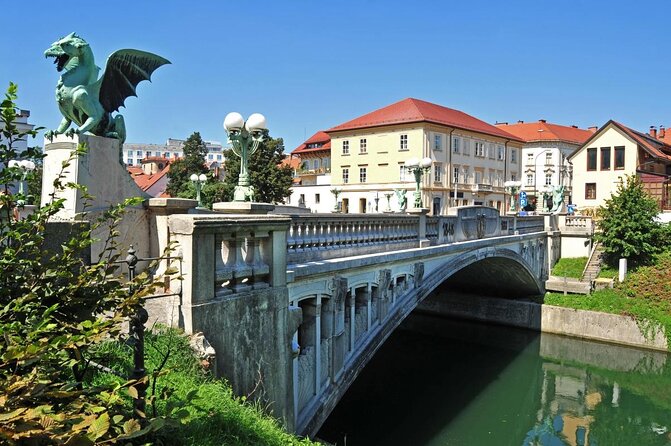
Dragon Bridge is the city’s best-known piece of modern architecture. The 20-minute stop gives you time to see its dragon-shaped form and understand its place over the Han River. Admission is free, so the stop adds a strong city landmark without using part of your entry-fee budget.
The bridge is also a useful contrast to what follows. Da Nang’s appeal is not only old temples and natural sites. Its modern public spaces, beach life, and bold engineering are part of the story, too.
A short coffee stop with local flavor
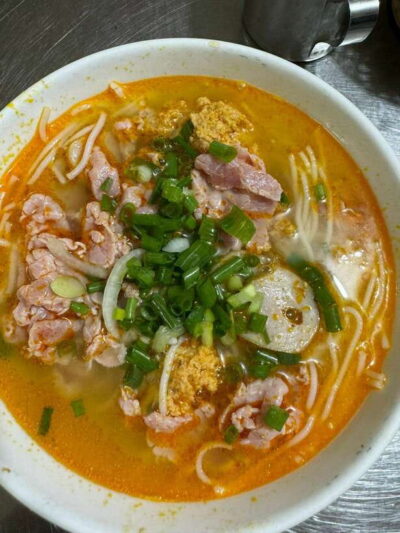
The tour includes about 30 minutes at a traditional coffee shop in Da Nang. The featured drink is Vietnamese coffee made with egg yolks and condensed milk. This is not ordinary drip coffee with a little sugar. The egg mixture gives it a thick, sweet texture, closer to a dessert than a standard morning cup.
You should tell the guide about dietary needs when booking. The tour provider specifically asks for that information in advance, and local food and drinks are included. The supplied details do not specify every dish or drink served, so you should treat the coffee as a known highlight while asking the guide what else is available on the day.
This stop also gives the tour a welcome pause before the outdoor sites. Marble Mountains and Son Tra involve walking, and a seated break helps keep the pace manageable.
Marble Mountains: caves, shrines, and stone steps
Marble Mountains are a group of limestone and marble hills south of Da Nang. The visit focuses on the caves, tunnels, and temples scattered through the hills. This is one of the tour’s most rewarding stops because the setting changes every few minutes: you may move from open views to shadowed cave interiors, then into a temple area built into the rock.
The site is not simply a scenic hill. The caves and religious spaces give you a look at the spiritual side of central Vietnam. Your guide can help explain how the natural formations and temples fit together, which is useful because the area can otherwise feel like a series of separate stairways and chambers.
This is also where you should think about footwear and energy. The tour information does not give a step count or a detailed mobility note, but caves and mountain temples naturally require walking on uneven surfaces and climbing. Most people can participate, yet you should be realistic about your comfort with steps and stone paths.
Because the overall schedule is full, the Marble Mountains visit may feel brisk. If caves and temples are your main interest, you may wish the tour spent longer here. If you are trying to understand the whole Da Nang and Hoi An area in one day, the shorter stop makes sense.
More Da Nang city tours:
- Lady Buddha, Marble Mountains, Coconut Jungle & Hoian City Tour
★ 5.0 · 370 reviews - Da Nang/Hoi An: Coconut Village Boat and Hoi An City Tour
★ 4.5 · 277 reviews - Da Nang Food Tour Motorbike & Sightseeing By Ao Dai Lady Rider
★ 5.0 · 121 reviews - Explore Da Nang: Marble Mountain & Monkey Mountain
★ 5.0 · 47 reviews
Son Tra Peninsula and the Lady Buddha statue
Son Tra Mountain rises to 693 meters and is about a 35-minute drive from Da Nang. The trip up changes the mood again, from beach and city to a quieter mountain setting. The mountain is described as a national park and natural area, so this stop adds scenery as well as religious culture.
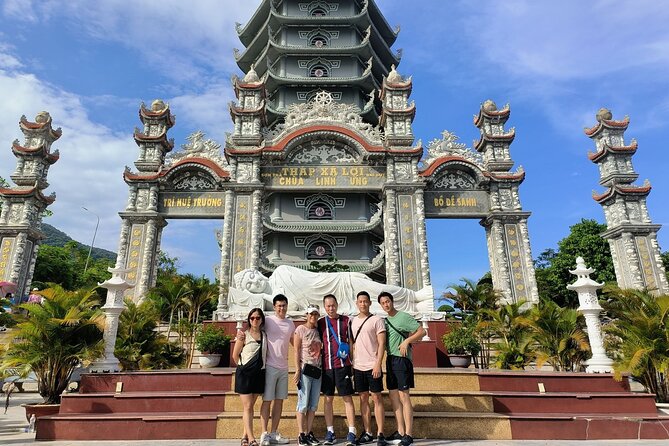
The main attraction is Lady Buddha at Linh Ung Pagoda. The statue is 67 meters tall and is identified as the tallest Buddha statue in Vietnam. Its scale is hard to grasp from a distance, so the 45-minute visit gives you time to look up at the statue, walk around the pagoda grounds, and take in the coastal setting.
This is one of the places where a guide improves the visit. A guide can explain the religious meaning of the pagoda and point out what deserves attention, rather than leaving you to take a quick statue photo and return to the vehicle.
The mountain section depends on weather and road conditions, though no specific disruption policy is provided. The tour includes a modern vehicle and driver, which is helpful on a route that connects the city with elevated viewpoints. It also keeps you out of the heat between stops.
Entering Hoi An Ancient Town

Hoi An Ancient Town is the heart of the second half of the experience. The town was once a Southeast Asian trading port, and its preserved buildings show the influence of Vietnamese, Chinese, and Japanese communities. The old center is compact enough to explore on foot, but there is plenty to notice in a short distance.
The tour allows about two hours in the ancient town, with admission included. That is enough for a guided introduction and several major sights, but it is not enough to cover every lane, shop, gallery, and food stall at a relaxed pace.
I like the way this part combines explanation with free time. Dat is praised for giving people time at each site, and other guides are described as flexible about personal interests. That matters in Hoi An because one person may want architectural details, another may want photographs, and someone else may care most about food or tailor shops.
Hoi An changes character as the day moves toward evening. The old streets become more atmospheric, and the market offers lanterns, snacks, and local goods. The tour’s timing is designed to include that evening feel, though the stated 5 to 6-hour duration makes the schedule look ambitious. Confirm the exact departure and return timing when booking so you know how much free time you will have.
Phuc Kien Assembly Hall and Chinese heritage
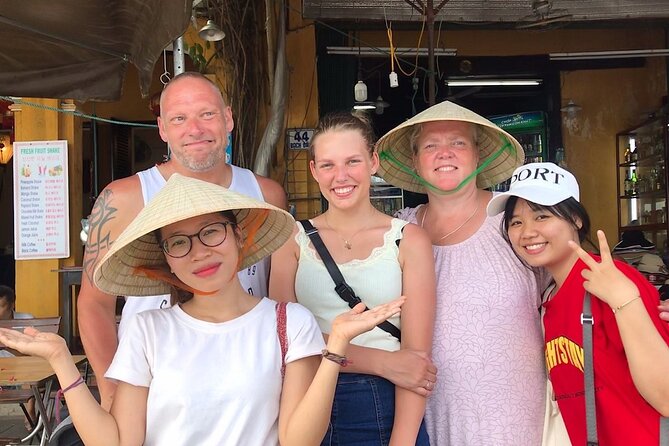
The Fujian, or Phuc Kien, Assembly Hall was built around 1690 for the Chinese community from Fujian. The site gives you a direct look at Hoi An’s trading connections and the role of overseas Chinese communities in the old port.
The planned visit lasts about 30 minutes. That is enough to see the main building and hear the basic story, but you will need to listen closely if you want to remember the details. The hall is not just decorative architecture. It reflects how merchants formed social and religious communities far from their original home.
This is a good stop for anyone who wants more than lantern photos. Hoi An can look like a charming old town at first glance, but buildings such as Phuc Kien explain why the town developed in this particular way.
The Japanese Covered Bridge and Tan Ky House
The Japanese Covered Bridge is Hoi An’s signature landmark. Completed in 1593, it links the town’s architectural story to its Japanese trading community. The 20-minute stop is long enough for a close look and photographs, though the bridge can attract attention from every direction.
The bridge is an essential stop, but it is also one of the places where you should expect limited quiet time. The tour gives you access and context, not a private viewing.
At the Old House of Tan Ky, you get a different view of Hoi An. The house shows how domestic buildings developed under several cultural influences. A 30-minute visit provides time to examine the structure and hear how daily life, trade, and architecture shaped the old town.
I find the contrast between the assembly hall, bridge, and house particularly useful. Together, they turn Hoi An from a collection of pretty buildings into a town with distinct Chinese, Japanese, and local Vietnamese connections.
Coffee, food, and the night market
Food is part of the tour rather than an afterthought. Local food and drinks are included, and the program features Vietnamese coffee as well as a walk through Hoi An’s night market. The market sells food, local products, and Hoi An’s famous lanterns.
You should not expect a full food-focused tour from the details provided. This experience uses food to introduce the area while giving most of the day to sightseeing. If your main goal is to sample many dishes, a dedicated evening food tour would likely allow more time at the table.
The market is still valuable because it shows Hoi An after the old buildings are lit and the shopping streets take on a different mood. Lanterns are an obvious souvenir, and the guide can point you toward evening food and shops. Dat is also praised for recommending places to eat and locations for tailor-made clothing.
If you want a tailored outfit, remember that the tour may only give you an introduction to the shopping scene. Use the guide’s recommendations, then allow extra time in Hoi An if your schedule permits.
What the guides add to the day
The strongest feature of this experience is the human side of the tour. The named guides receive praise for clear explanations, patience, flexibility, and a relaxed manner. Tracee is described as both talkative and well informed, while Kelly is singled out as a good photographer. Those details matter because a long sightseeing day feels much easier when the guide matches your pace.
Guide quality can vary from departure to departure, and the tour does not promise a specific guide. Still, the repeated pattern is encouraging: Dat, Thinh, Mee, Anh, Lam, Kelly, Long, and Tracee are all identified positively for different strengths.
You should tell the guide early if you care most about history, religion, photography, food, shopping, or free time. The experience works best when the guide knows what to emphasize. A flexible guide can turn a packed schedule into a more personal day, while a fixed pace may feel rushed if you want to linger.
Transport, timing, and practical value
The modern vehicle and professional driver are important here. Da Nang and Hoi An involve several separate areas, and moving between them by public transport would take more effort and planning. Air-conditioning also gives you a break from the central Vietnamese heat.
The group can include up to 10 people, so do not assume the vehicle will feel like a private car. You should receive more personal attention than on a large coach, but the day still follows a shared schedule.
The tour begins at The Cups Coffee Roastery and ends back at the same meeting point. Pickup is offered as a feature, but the provided meeting-point details identify the coffee roastery as the start, so confirm pickup arrangements if you are staying elsewhere.
Admission fees are included for the listed attractions, as are bottled water and local food and drinks. Gratuity is not included, so budget separately if you wish to thank the guide or driver.
Free cancellation is available if you cancel at least 24 hours before the start time. Changes or cancellations inside that window are not accepted for a refund.
Who should book this tour
I would choose this tour if you have limited time in Da Nang and want a guided introduction to both Da Nang and Hoi An. It suits first-time visitors, couples, families, and anyone who prefers a vehicle and clear routing instead of working out each connection alone.
It is also a good fit if you value explanation. The caves, pagoda, assembly hall, bridge, and old house all become more meaningful when someone can connect them to local religion, trade, architecture, and daily life.
I would hesitate if your priority is a slow Hoi An visit. You may want more time for food, shopping, photography, or simply sitting in the old town. The advertised 5 to 6 hours is a lot to ask of a route with Da Nang monuments, Marble Mountains, Son Tra, Lady Buddha, and several Hoi An stops.
Should you book it?
Book this experience if you want maximum coverage in one day, included admissions, a modern vehicle, and a small group with an English-speaking guide. The $72 price is fair when you count transport, driver, entrance fees, water, food, drinks, and personal guiding.
Skip it if you already know Da Nang and Hoi An or want to spend most of your time in one place. For a first look at the region, though, the mix is strong: beach, bridge, mountain, Buddhist statue, caves, old trading houses, coffee, food, and lanterns. Just go in expecting a lively introduction, not a slow and leisurely tour.
FAQ
How long does the Da Nang and Hoi An tour last?
The advertised duration is approximately 5 to 6 hours. The schedule covers several Da Nang sights and a substantial visit to Hoi An, so the exact pace may feel full.
Where does the tour begin?
The stated meeting point is The Cups Coffee Roastery, 192 Nguyen Van Thoai, Bac My Phu, Ngu Hanh Son, Da Nang 550000, Vietnam.
Where does the tour end?
The activity ends back at the starting point in Da Nang.
Is transportation included?
Yes. The tour includes use of a modern vehicle with a professional driver. It is designed to reduce the need for public transport between Da Nang and Hoi An.
How large is the group?
The maximum group size is 10 people.
Is an English-speaking guide included?
Yes. An English-speaking guide is included. Guides named in the tour information include Dat, Thinh, Mee, Kelly, Long, Anh, Lam, and Tracee.
Are entrance fees included?
Yes. Entrance fees for the included attractions are covered, including Lady Buddha, Hoi An Ancient Town, Phuc Kien Assembly Hall, the Japanese Covered Bridge, and the Old House of Tan Ky.
Are food and drinks included?
Yes. Local food and drinks, bottled water, and the Vietnamese coffee stop are included. You should provide any dietary requirements when booking.
What places are visited?
The route includes My Khe Beach, Dragon Bridge, a traditional coffee shop, Son Tra Mountain, Lady Buddha, Marble Mountains, Hoi An Ancient Town, Phuc Kien Assembly Hall, the Japanese Covered Bridge, the Old House of Tan Ky, and Hoi An’s night market.
What is the cancellation policy?
You can cancel for a full refund up to 24 hours before the experience starts. Cancellations or changes made less than 24 hours before the start time are not accepted for a refund.
Just added around Da Nang
- From Da Nang: Ba Na Hills Golden Bridge Private Tour & Lunch★ 3.3 · 3 reviews
- Golden Bridge- BaNa Hills & Marble Mountain By Private Car★ 4.7 · 3 reviews
- Best Tour/Transfer to Hue Imperial City from Da Nang/ Hoi An★ 5.0 · 3 reviews
- Danang Private Guided Night Tour and Bar★ 5.0 · 3 reviews
- Hot Mineral Mud Bath in Da Nang★ 3.5 · 3 reviews
- Da Nang: BaNa Hills & Golden Bridge Day Tour With 5 options★ 5.0 · 3 reviews
- Danang Food City Tour by Motorbike – Private Tour★ 5.0 · 3 reviews
- Da Nang: Da Nang Charming show ticket★ 4.6 · 3 reviews
Da Nang City Tours, compared.

Lady Buddha, Marble Mountains, Coconut Jungle & Hoian City Tour
Read our review →
Da Nang Food Tour Motorbike & Sightseeing By Ao Dai Lady Rider
Read our review →
Da Nang City Tour Motorbike/Scooter & Sightseeing By Lady Rider
Read our review →
Da Nang City Street Food Private Tour With Local Students
Read our review →
Guided Private Hue City Tour from Da Nang or Hoi An
Read our review →
Hue City Tour From Da Nang- Hue Day Trip From Danang
Read our review →Browse the lists this tour appears in